What Is an Overjet?
Overjet refers to how far your upper front teeth stick out horizontally beyond your lower front teeth. Think of it as the horizontal distance between the two sets of teeth when your mouth is closed. A small amount of overjet — around 2 to 3 millimeters — is completely normal. When that gap is larger, it becomes the condition orthodontists treat.
You may have heard the term “buck teeth” — that’s exactly what a significant overjet looks like. The upper teeth appear to protrude forward, sometimes leaving a noticeable gap between the upper and lower teeth even when the mouth is closed. It can affect both appearance and function, making it harder to bite into certain foods or speak clearly.
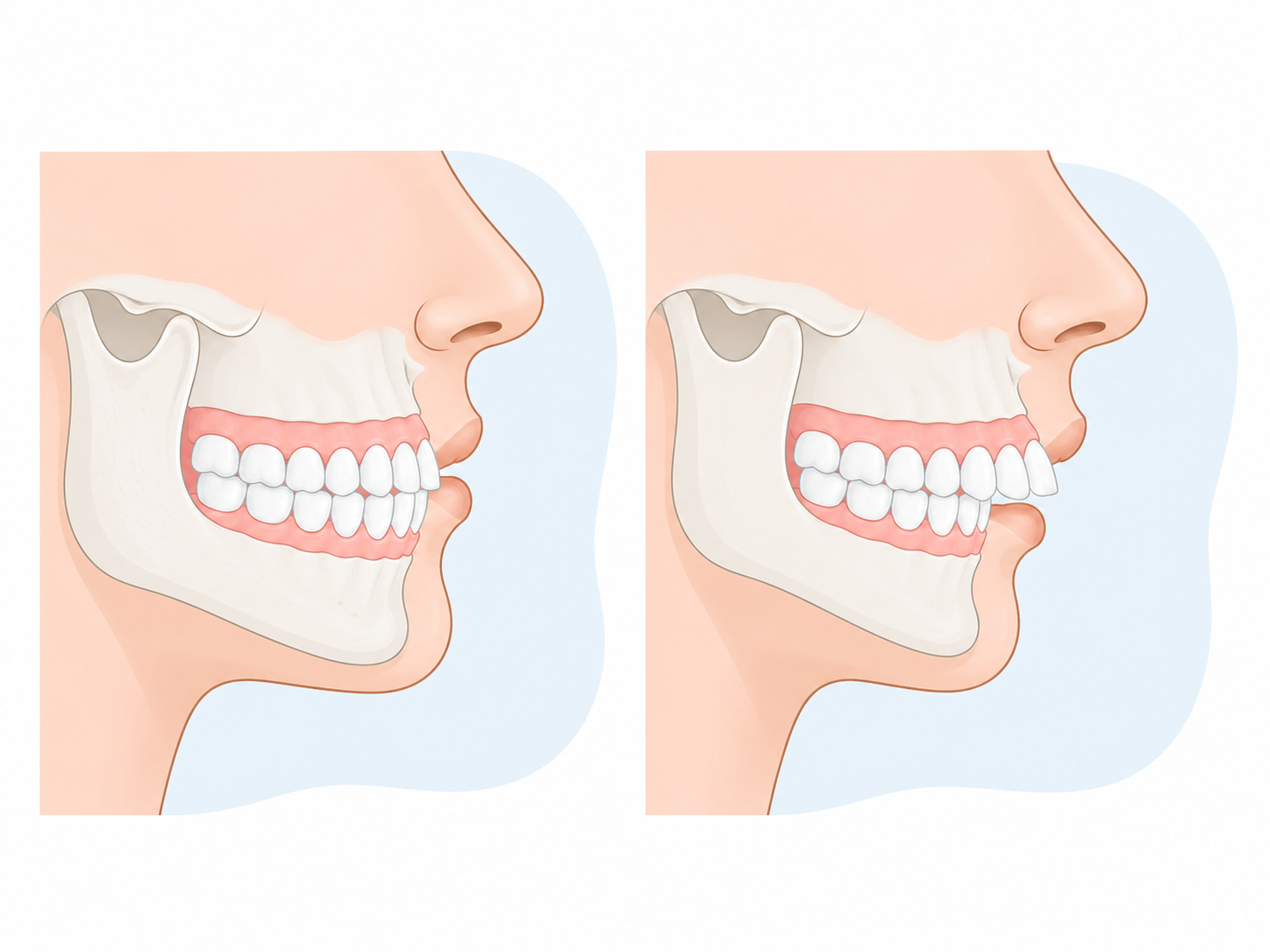
Overjet vs. Overbite: What’s the Difference?
Here’s where a lot of people get confused, and it’s easy to see why — both terms involve how the upper teeth relate to the lower teeth. But they measure different things:
- Overjet is the horizontal distance — how far forward the upper teeth jut out past the lower teeth.
- Overbite is the vertical distance — how much the upper front teeth overlap down over the lower front teeth.
You can have one without the other, or you can have both at the same time. For example, someone might have a deep overbite with very little overjet, or they might have significant overjet with a minimal overbite. An orthodontist measures both to get a complete picture of how your bite is functioning — you can see a side-by-side breakdown of these bite types in our full guide to overbite, underbite, and crossbite treatment.
A deep bite is a related but distinct condition — it specifically refers to excessive vertical overlap. See our guide to deep bite for more detail.
What Causes an Overjet?
Overjet can develop for several different reasons, and it’s more common than many people realize. Typical causes include:
- Genetics — Jaw size and tooth position are often inherited. If a parent had buck teeth, a child may too.
- Thumb-sucking or pacifier use — Prolonged habits in early childhood can push the upper teeth forward over time.
- Tongue thrusting — Regularly pushing the tongue against the front teeth can gradually shift them forward.
- Mouth breathing — Long-term mouth breathing can affect how the jaw develops, contributing to an improper bite.
- Missing lower teeth — When lower teeth are absent, the upper teeth may drift or tilt forward without opposition.
In some cases, overjet is mild and doesn’t cause functional problems. In others, it’s severe enough to affect chewing, speech, and even the risk of dental injury — protruding teeth are more vulnerable to trauma during falls or contact sports.
How Is Overjet Treated?
The right treatment depends on your age, the severity of the overjet, and what’s causing it. At American Braces & Smile Center in Ashburn, VA, orthodontists assess each patient individually before recommending a treatment path.
Common treatment options include:
- Braces — Traditional metal or clear braces are one of the most effective ways to correct overjet. They gradually move both the upper and lower teeth into proper alignment and can address jaw position as well when combined with other appliances.
- Invisalign — For mild to moderate cases, clear aligners can shift teeth into a better position. You can schedule a free Invisalign consultation at ABSC to find out if it’s a good fit for your situation.
- Elastics — In many overjet cases, orthodontic elastics work alongside braces to help guide the upper and lower jaw into better alignment. Learn more about how jaw elastics work for bite correction.
- Functional appliances — In growing children, orthodontists sometimes use appliances that help guide jaw growth to reduce the overjet before it becomes a larger problem.
- Early orthodontic treatment — Catching overjet early in children (around ages 7–10) can sometimes simplify treatment later or reduce overall treatment time.
Treatment timelines vary widely and depend on how the overjet fits into your overall bite. If you’re curious about what affects how long orthodontic treatment takes, it’s worth reading about what really impacts your orthodontic timeline, or specifically how long bite correction takes with braces.
Overjet Braces vs. Overjet Invisalign: Which Is Better?
There’s no universal answer — it depends on the case. Braces give orthodontists more precise control over tooth movement, which can be important for correcting more severe overjet or when jaw adjustments are involved. Invisalign works well for many mild to moderate cases and is popular with adults who prefer a less visible option.
If you’re unsure which direction to go, the best starting point is an in-person consultation. Seeing before and after results from real patients can also give you a realistic idea of what’s possible.
When Should You See an Orthodontist?
If you or your child has noticeably protruding upper teeth, difficulty biting or chewing, or has been told about an overjet by a general dentist, it’s a good time to consult an orthodontist. The American Association of Orthodontists recommends children have their first orthodontic evaluation by age 7 — not because treatment always begins then, but because early assessment helps identify issues before they worsen.
Adults can also benefit from overjet treatment at any age. It’s never too late to improve your bite and your smile.
Frequently Asked Questions
Is an overjet the same as buck teeth?
Essentially, yes. “Buck teeth” is the informal term for a noticeable overjet — when the upper front teeth protrude significantly forward beyond the lower teeth. The clinical term orthodontists use is overjet.
Can overjet fix itself without treatment?
In most cases, overjet does not self-correct. Mild cases may not require treatment, but significant overjet typically needs orthodontic intervention to improve bite function and alignment. The earlier it’s addressed, the more options are usually available.
How long does it take to fix an overjet with braces or Invisalign?
Treatment time depends on the severity of the overjet and whether jaw alignment is involved. Mild cases may resolve in 12 to 18 months, and more complex cases can take longer — see our full breakdown of how long bite correction takes with braces for a more detailed timeline by bite type. Your orthodontist will give you a personalized estimate after an exam.
Does ABSC treat overjet at the Ashburn, VA location?
Yes. The Ashburn office at American Braces & Smile Center treats overjet and other bite issues in patients of all ages, using braces, Invisalign, and other appliances as appropriate. You can visit the Ashburn orthodontics page to learn more or request a consultation.
Is overjet treatment covered by insurance?
Many dental insurance plans with orthodontic benefits cover a portion of overjet treatment, particularly for children. Coverage for adults varies. The ABSC team can help you understand your benefits when you come in for a consultation.
Ready to Get Your Bite Evaluated in Ashburn?
An overjet is one of the most common bite concerns that orthodontists treat — and one of the most treatable. Whether it’s mild or significant, there are effective options available. If you’re in Ashburn, VA or the surrounding Loudoun County area and want to know exactly what you or your child is dealing with, the team at American Braces & Smile Center is here to help. Contact us today to schedule your evaluation and get a clear picture of your treatment options.