What Is a Bite Problem, and Why Does It Matter?
A bite problem — also called a malocclusion — is when your upper and lower teeth don’t come together the way they should. This can happen for a variety of reasons, including genetics, childhood habits, tooth loss, or teeth that have shifted over time.
Common bite issues in adults include:
- Overbite: Upper front teeth overlap too far over the lower front teeth
- Underbite: Lower teeth sit in front of the upper teeth when the mouth is closed
- Crossbite: Some upper teeth bite inside the lower teeth instead of outside
- Open bite: Upper and lower teeth don’t touch at all when the mouth is closed
- Deep bite: A severe version of an overbite where the upper teeth nearly cover the lower ones entirely
Left untreated, bite issues can lead to uneven tooth wear, jaw discomfort, difficulty chewing, and in some cases, TMJ-related problems. Addressing a bite issue isn’t just cosmetic — it can have a real impact on your long-term dental health.
Can Adults Actually Fix Their Bite?
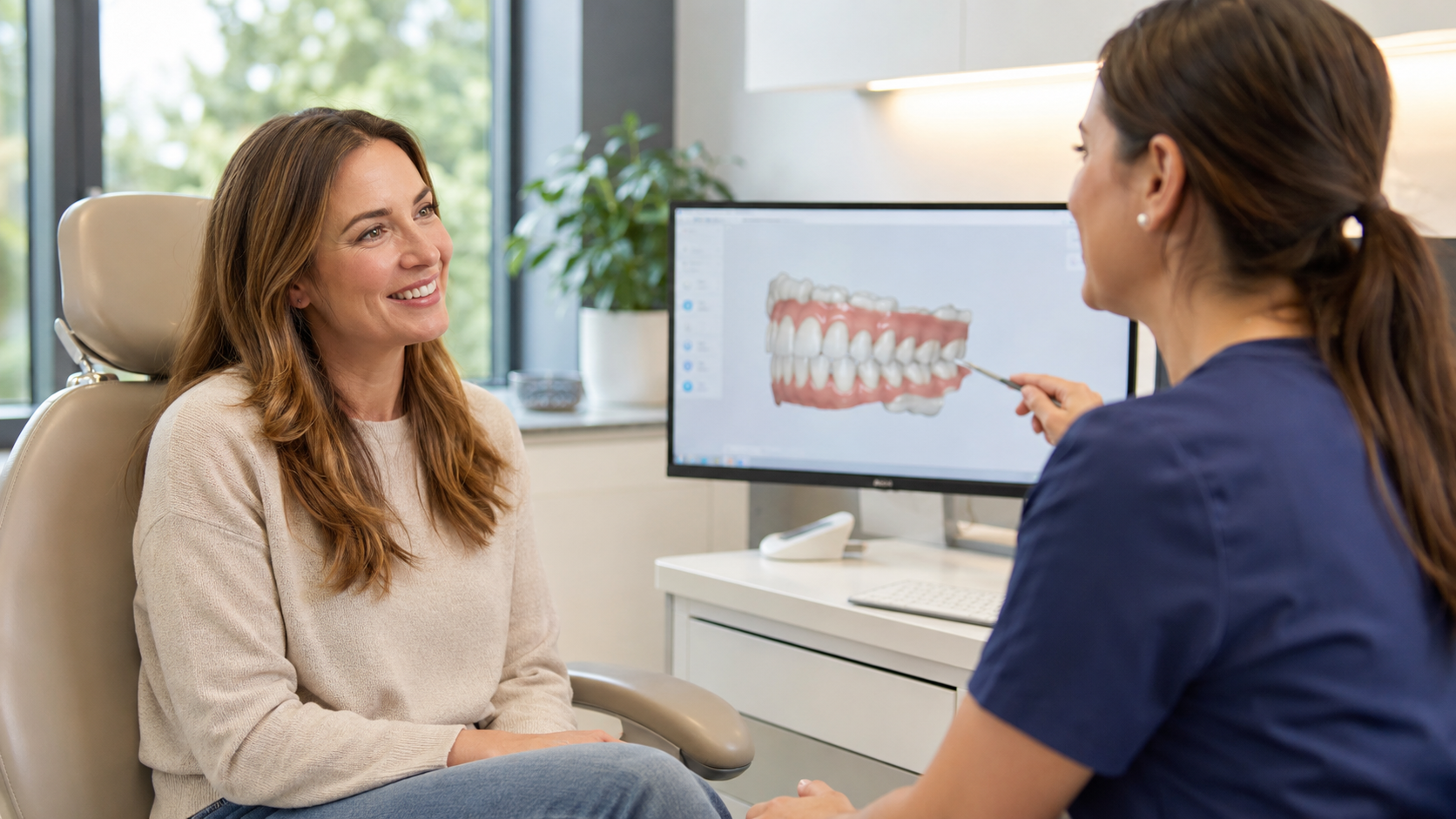
Yes — and this is one of the most common questions adults ask when they first consider treatment. The short answer is that bite correction at any age is possible for most people, though the approach and timeline may differ from what it would be for a child or teenager.
Adult bone structure is fully developed, which means some very severe jaw discrepancies might require a different approach or, in rare cases, a referral to an oral surgeon. But for the majority of bite problems adults deal with — including overbites, crossbites, and crowding-related bite issues — braces or clear aligners like Invisalign can do the job effectively.
Many adults across Northern Virginia, including right here in Woodbridge, are choosing to address these issues later in life. It’s more common than you might think, and the treatment options available today make it more comfortable and discreet than ever before.
Treatment Options for Adult Bite Correction
The right treatment depends on the type and severity of your bite issue. An orthodontist will evaluate your teeth, jaw alignment, and overall bite pattern before recommending a plan. That said, here are the most common paths for adult bite correction:
Braces
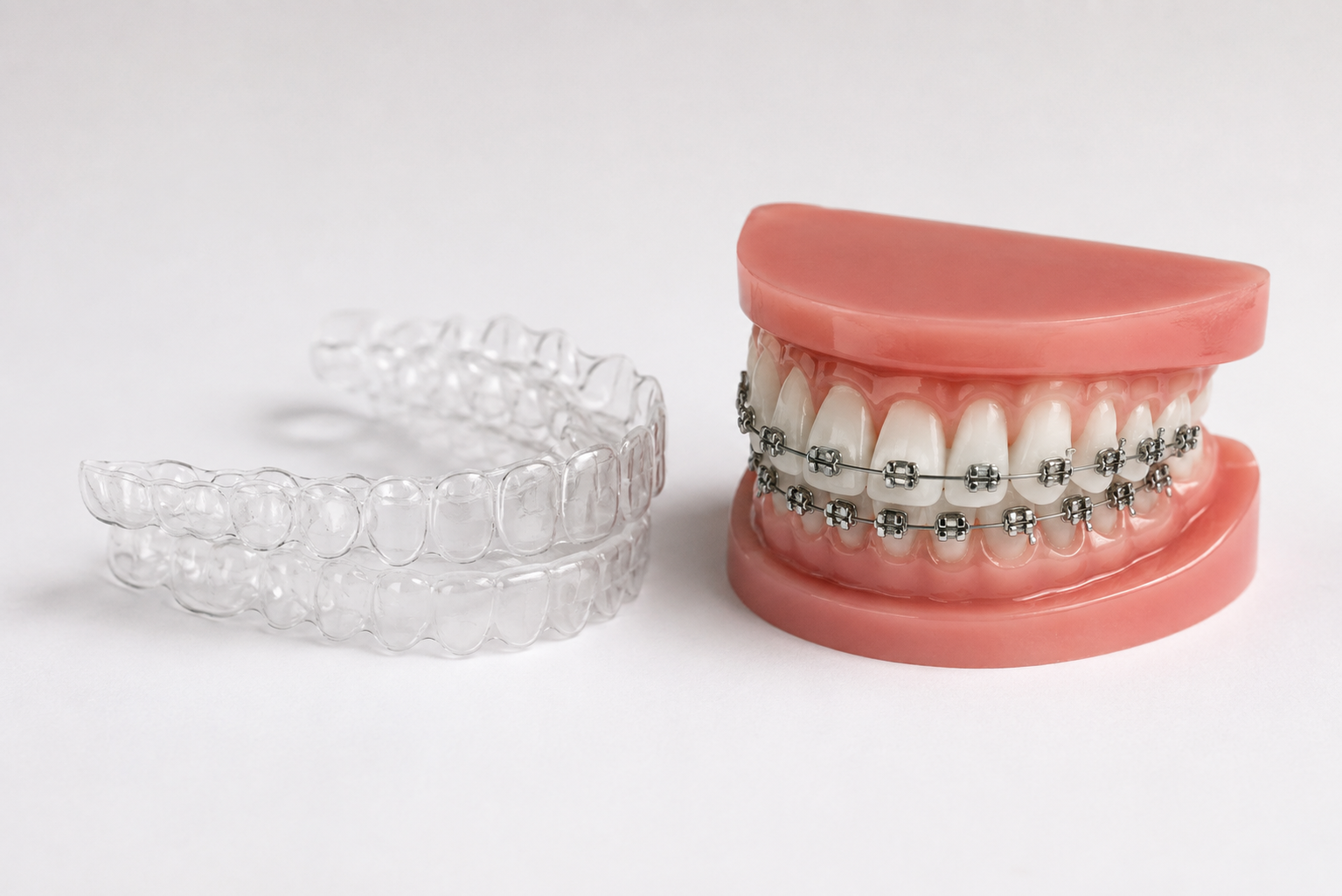
Traditional metal braces remain one of the most effective options for correcting complex bite problems. They give your orthodontist precise control over tooth movement and jaw alignment. Learn more about braces at ABSC to understand what this option involves for adult patients.
Clear Aligners (Invisalign)
Invisalign has become a go-to option for adults who want a more discreet treatment path. Clear aligners work well for mild to moderate bite corrections, including many overbites and crossbites — you can compare the two side by side on our deep bite vs. overbite page. They’re removable, which makes eating and brushing much easier during treatment.
Self-Ligating Braces
For patients who want braces but prefer a lower-profile option, self-ligating braces use a different bracket system that can reduce friction and may shorten overall treatment time. ABSC offers self-ligating braces in Virginia as part of its adult treatment options.
Combination Approaches
Some bite corrections — especially those involving significant jaw discrepancies — may require a combination of orthodontic appliances alongside braces or aligners. Many patients also wear jaw elastics for bite correction during part of treatment to help align the upper and lower jaw. Your orthodontist will explain what’s needed based on your specific case.
What the Treatment Process Looks Like
For adults considering bite correction, the process typically follows these steps:
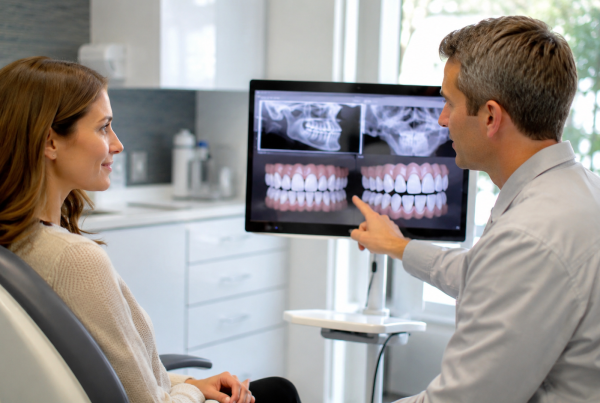
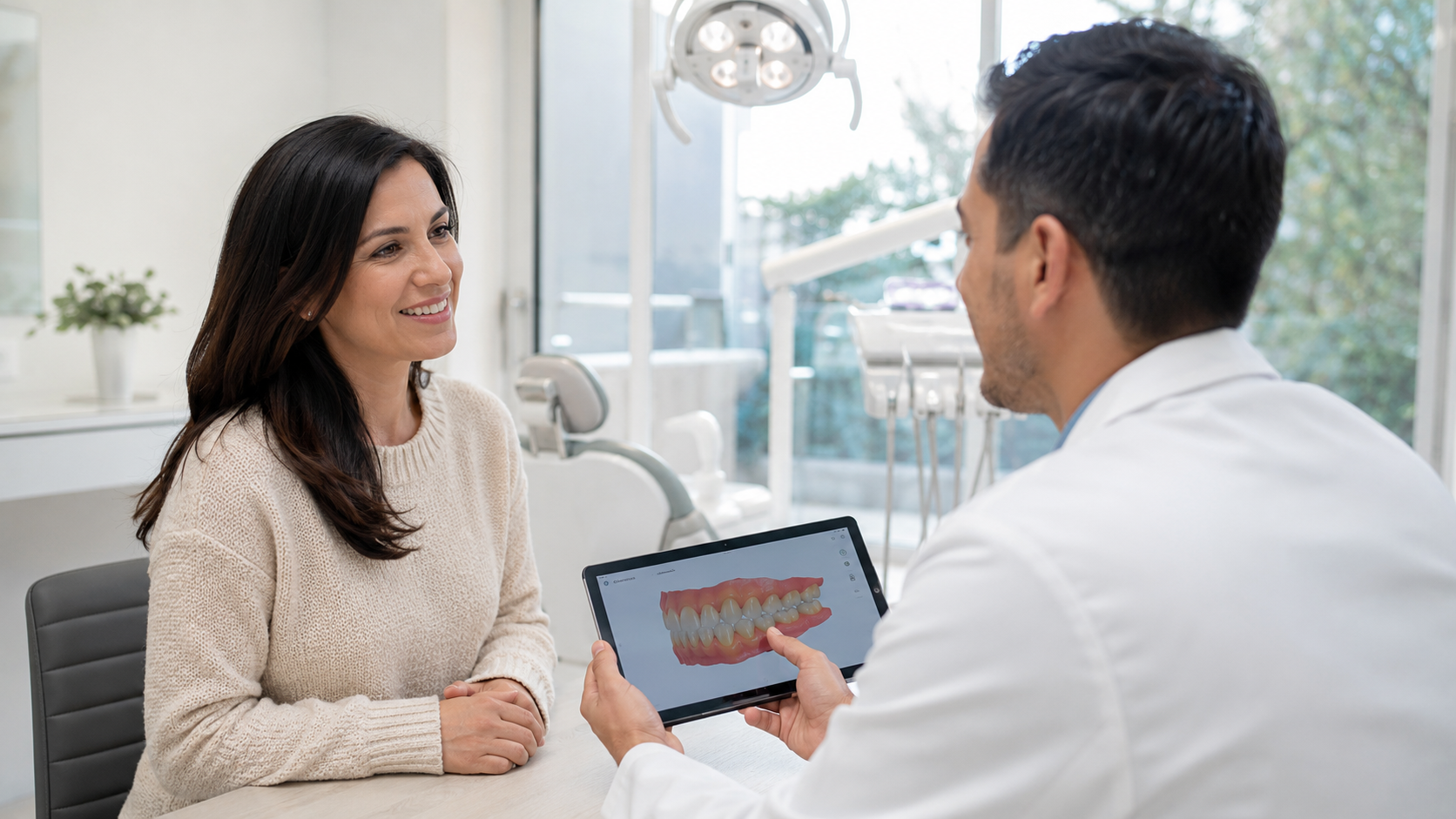
- Initial consultation: Your orthodontist evaluates your bite, reviews X-rays, and discusses your goals and concerns
- Treatment planning: A customized plan is created based on the type of correction needed and your lifestyle preferences
- Active treatment: This is the phase where your braces or aligners are working to shift teeth and correct your bite
- Retention: After active treatment ends, a retainer keeps your teeth and bite in their corrected positions
Treatment length varies widely. Mild bite issues may resolve in 12 to 18 months, while more complex cases can take longer. See how long bite correction takes with braces for a closer look at the factors that affect your timeline.
What to Expect as an Adult Patient
Starting orthodontic treatment as an adult is a different experience than going through it as a teenager — but not in the ways most people fear. Here’s what to realistically expect:
- Some initial discomfort: New appliances or aligner trays can cause soreness for a few days at a time, especially right after adjustments
- Adjustments to eating habits: With braces, some foods need to be avoided; with Invisalign, you remove your aligners to eat
- More awareness of oral hygiene: Keeping teeth clean during treatment takes a little more effort, but it’s manageable with the right routine
- Regular appointments: Expect check-ins every 6 to 10 weeks depending on your treatment
- Results that last: With proper retention, bite corrections made in adulthood hold up well long term
Adults often make some of the most consistent and motivated orthodontic patients — because the choice to start treatment is entirely yours.
Why Northern Virginia Adults Choose ABSC
American Braces & Smile Center has been treating patients in Northern Virginia for over 25 years. Across all three offices — Woodbridge, Ashburn, and Alexandria — our team sees a steady mix of adult patients coming in for bite correction, whether they’re dealing with something they’ve had since childhood or noticing new changes in how their teeth fit together. Combined, our offices serve patients throughout Prince William County, Loudoun County, and Fairfax County, including Dale City, Lake Ridge, Manassas, Leesburg, Sterling, and Springfield.
Frequently Asked Questions
Is bite correction for adults more difficult than for teenagers?
Not necessarily. Adults have fully developed bones, so treatment may take slightly longer for complex cases, but most bite issues can still be corrected effectively with braces or Invisalign. The process is very similar, and results can be just as strong.
Can Invisalign fix a bite problem, or do I need braces?
Invisalign can address many bite issues, including mild to moderate overbites and crossbites. Whether it’s the right fit for your specific case depends on the severity of your bite and other factors. An orthodontist can evaluate this during your consultation.
How long does adult bite correction take?
Treatment length depends on the type and complexity of your bite issue. Many cases fall in the 12 to 24 month range, but simpler corrections can be shorter. Your orthodontist will give you a realistic estimate after reviewing your case.
Do you offer free consultations for adult bite correction in Woodbridge, VA?
Yes. ABSC offers a free Invisalign consultation where you can discuss your bite concerns, get evaluated, and learn about your options — with no obligation to start treatment.
Will I need a retainer after bite correction treatment?
Yes. Retainers are a standard part of any orthodontic treatment. After your bite is corrected, a retainer keeps everything in place. Without one, teeth have a natural tendency to shift back over time.
Ready to Fix Your Bite? Start with a Free Consultation
If you’ve been living with a bite problem and wondering whether it’s too late to do something about it, the answer is almost always no. Bite correction for adults is effective, accessible, and more comfortable than most people expect. Whether braces or Invisalign is the better fit for you, the best starting point is a simple conversation with an orthodontist who can actually look at your bite and give you real answers.
ABSC’s Woodbridge office is accepting new adult patients. Schedule your free consultation today and take the first step toward a bite that works the way it should.