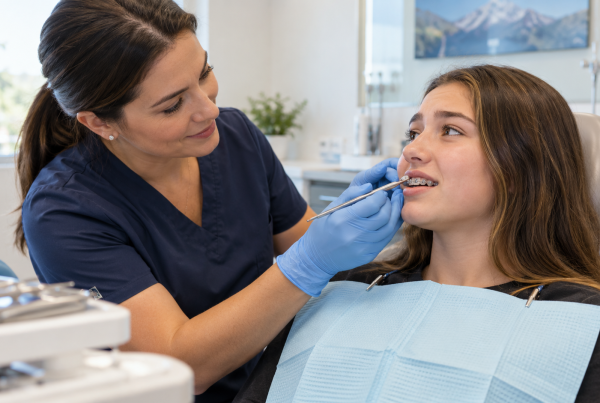
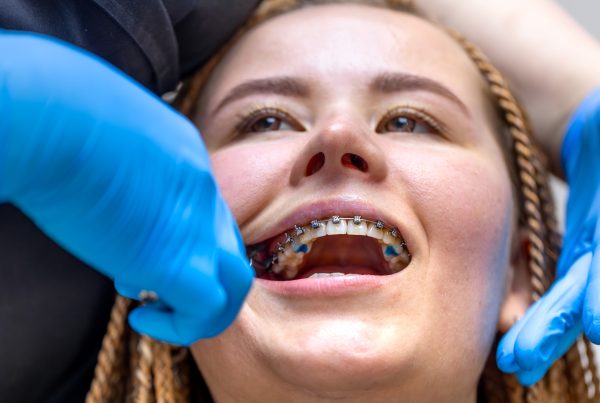
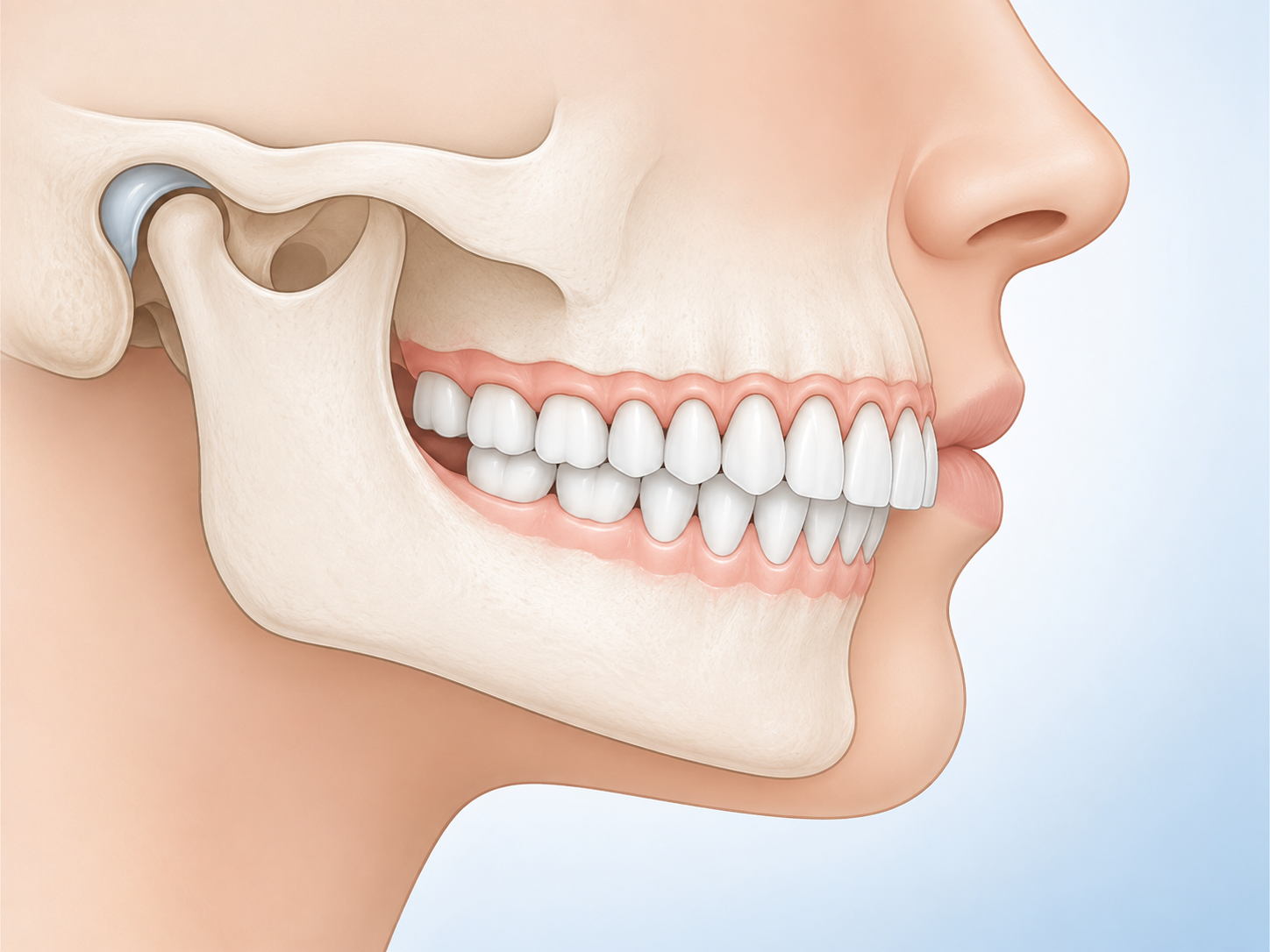
A deep bite is a malocclusion in which the upper front teeth excessively overlap the bottom front teeth when back teeth are closed. This is also called an overbite or closed bite. While a deep bite may or may not be an esthetic concern for most patients, its presence usually indicates there are other problems that should be addressed. If you’re trying to understand how a deep bite compares to a standard overbite, our deep bite vs. overbite guide breaks down the distinction in more detail.
Deep Bite at a Glance: How It Compares to Other Bite Types
| Bite Type | What’s Happening | Typically Confused With |
|---|---|---|
| Deep Bite | Upper front teeth excessively overlap lower front teeth vertically | Overbite (deep bite is a more severe form) |
| Overjet | Upper front teeth stick out horizontally past lower teeth | Deep bite (different direction of misalignment) |
| Open Bite | Front teeth don’t touch at all when biting down | The functional opposite of a deep bite |
| Crossbite | One or more upper teeth sit inside the lower teeth | Underbite (crossbite can affect just a few teeth) |
Deep bite is specifically about how much the upper teeth cover the lower teeth vertically — not how far forward they sit (that’s overjet) or whether the teeth touch at all (that’s an open bite). Many patients have more than one of these conditions at the same time, which is why a full orthodontic evaluation looks at the whole bite, not just one measurement.
Signs You Might Have a Deep Bite
A deep bite isn’t always obvious just by looking in the mirror — especially in milder cases. Common signs include:
- Your upper front teeth cover most or all of your lower front teeth when you bite down
- You can barely see your lower front teeth when your mouth is closed and relaxed
- The lower teeth or gum tissue behind your upper front teeth show signs of wear or irritation
- You notice excessive wear, flattening, or chipping on your lower front teeth
- Your chin appears shorter or more recessed than expected for your face shape
- You experience jaw soreness, clicking, or discomfort, particularly after chewing
Not everyone with a deep bite experiences all of these signs, and severity varies widely. If any of this sounds familiar, an orthodontic evaluation is the only way to know for certain how significant the deep bite is and whether it needs treatment.
What causes a deep bite?
The most common is a small lower jaw. When the lower jaw is shorter than the upper, the upper teeth are further “forward” and the lower teeth continue to grow until they hit the back of the upper teeth (the cingulae) or the roof of the mouth. Additionally, as the lower front teeth grow up under the top ones, they often get squeezed together creating crowding and alignment issues.
Another cause of a deep bite is a missing lower tooth. This creates a condition similar to having a short lower jaw. Finally, extremely strong biting muscles, common in patients who clench or grind their teeth, can deepen the bite.
Why does a deep bite need to be fixed?
Besides looking better, there are at least four other reasons:
- Over-erupted lower front teeth tend to wear down more quickly. Patients who clench or grind their lower teeth against the cingulae of the upper teeth experience excessive wear that can result in the loss of tooth structure.
- If a patient is biting into the roof of their mouth, painful sores or ulcers may develop. These can make normal eating very uncomfortable.
- If a substantial amount of tooth structure has been lost, the orthodontist will need to recreate the space needed for restoration by moving the upper and lower teeth apart (opening the bite).
- Unraveling the crowding and crookedness that usually accompanies deep bites requires that the deep bite be corrected to allow room to align the crowded teeth.
How does an orthodontist correct a deep bite?
First, either the upper and lower front teeth, or both, can be moved up into the supporting bone. Or second, the side and back teeth can be elongated which opens the bite and creates that same effect as intruding the front ones. In many cases, orthodontic elastics are also used to help guide the jaw into the corrected position — see our guide on how jaw elastics work for bite correction for more on how that process works.
A trained orthodontic specialist knows when each method, or both, should be used. Additionally, these movements can be accomplished with either braces or clear aligners, and your orthodontist can help you determine which is best for you. Treatment length varies by case — see how long bite correction takes with braces for a general timeline.
What to Expect at Your Deep Bite Consultation
A deep bite evaluation at ABSC is straightforward and starts with understanding exactly what’s happening with your bite before any treatment is recommended:
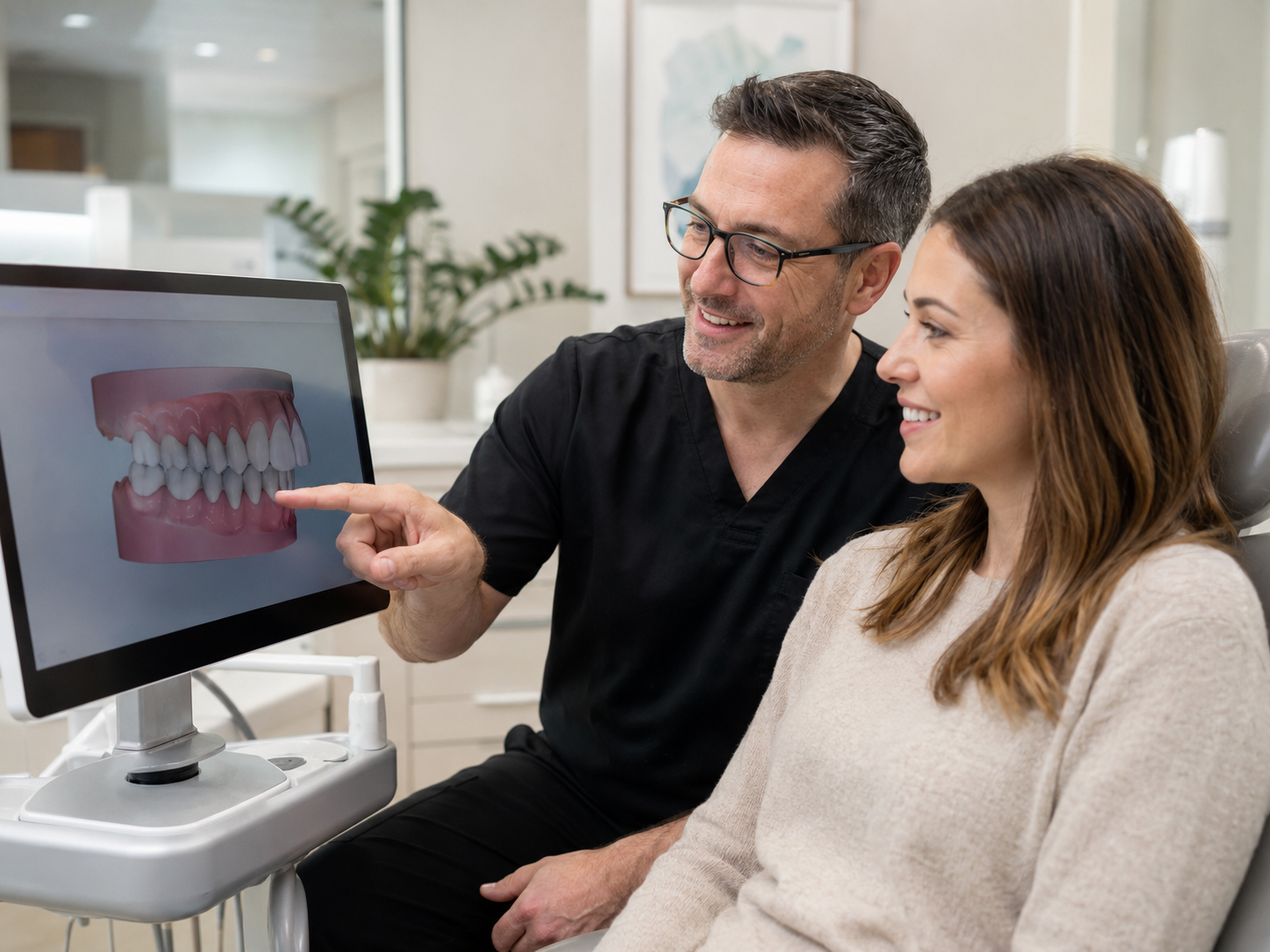
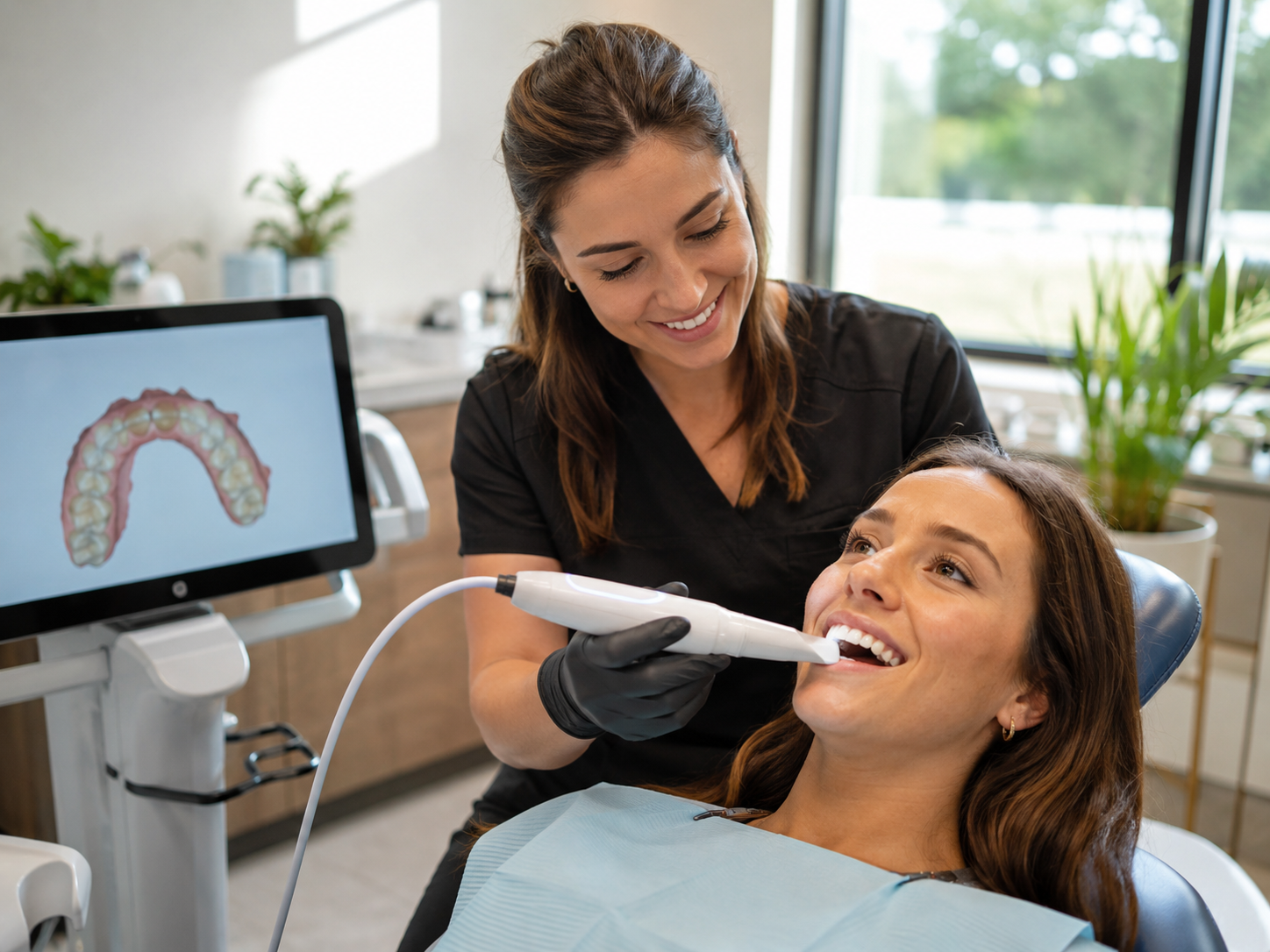
- Digital bite assessment. Using iTero digital scanning technology, your orthodontist gets a precise, detailed view of how your upper and lower teeth meet — no messy impressions required.
- Discussion of your specific case. Your orthodontist will explain what’s causing your deep bite — whether it’s jaw-related, tooth-related, or a combination — in plain language, not just clinical terms.
- Treatment options tailored to you. You’ll walk through whether braces, Invisalign, or a combination approach makes the most sense given your age, bite severity, and goals.
- A clear timeline and cost picture. No guessing — you’ll leave with a realistic sense of how long treatment will take and what it involves.
This first visit is free and comes with no obligation to move forward with treatment.
Deep Bite in Children vs. Adults
Age plays a real role in how deep bite treatment is approached. The American Association of Orthodontists recommends that children have their first orthodontic evaluation by age 7 — early enough to catch a developing deep bite while the jaw is still growing.
In growing children, a deep bite is often easier to influence. Because the jaw hasn’t finished developing, orthodontists have more tools available — including guiding jaw growth directly — which can sometimes reduce the complexity of treatment later on. This is often part of what’s known as early orthodontic treatment, or Phase 1.
In adults, the jaw is fully developed, so treatment relies more on repositioning the teeth themselves — through intrusion of the front teeth, elongation of the back teeth, or a combination of both, as described above. Adult treatment is still very effective, but timelines can run longer, and in more severe skeletal cases, orthodontic treatment may be coordinated alongside other specialists. Either way, a deep bite is treatable at any age — it’s never too late to address it.
Why Choose ABSC for Deep Bite Treatment
Dr. Ron Hessamfar and the ABSC team bring over 20 years of orthodontic experience to deep bite cases specifically — including both straightforward tooth-based corrections and more complex cases involving jaw growth guidance in younger patients. ABSC has been recognized as a Top Dentist by Northern Virginia Magazine and voted Best Orthodontist in Prince William and Loudoun County, with digital iTero scanning used at every evaluation to plan treatment with precision from the very first visit.
Frequently Asked Questions
Is a deep bite the same as an overbite?
A deep bite is a type of overbite — specifically, a more pronounced vertical overlap where the upper front teeth cover a significant portion of the lower front teeth. All deep bites are overbites, but not all overbites are deep enough to be classified as a deep bite.
Can a deep bite cause pain?
It can. A severe deep bite may cause the lower teeth to bite into the roof of the mouth, leading to sores or discomfort, and can contribute to jaw strain or TMJ-related symptoms over time.
Does a deep bite need braces, or can Invisalign fix it?
Both can treat a deep bite depending on severity. Your orthodontist will evaluate your specific case at a consultation to recommend the most effective option.
Can a deep bite get worse if I don’t treat it?
Yes. Left untreated, a deep bite tends to progress gradually — increasing tooth wear, raising the risk of gum or jaw issues, and sometimes making later treatment more involved. Addressing it earlier generally means simpler treatment and a more predictable outcome.
Does ABSC treat deep bites in Ashburn and Woodbridge?
Yes. ABSC evaluates and treats deep bites at both our Ashburn and Woodbridge offices, using braces, Invisalign, and elastics as needed.
Deep Bite Treatment in Ashburn and Woodbridge, VA
American Braces & Smile Center evaluates and treats deep bites at both our Ashburn and Woodbridge offices — serving families throughout Loudoun County from Ashburn, and Prince William County from Woodbridge. Whichever office is closer to home, our approach is the same: a thorough evaluation, a clear explanation of what’s going on with your bite, and a treatment plan built around your specific case — not a one-size-fits-all answer.
American Braces & Smile Center often offers initial exams at no (or low) cost, and at no obligation.
When you choose an American Braces & Smile Center orthodontist for orthodontic treatment, you can be assured that you have selected a highly skilled specialist. Orthodontists are experts in orthodontics and dentofacial orthopedics – properly aligning teeth and jaws – and possess the skills and experience to give you your best smile.
Click here to schedule your free no-obligation orthodontic consultation today.