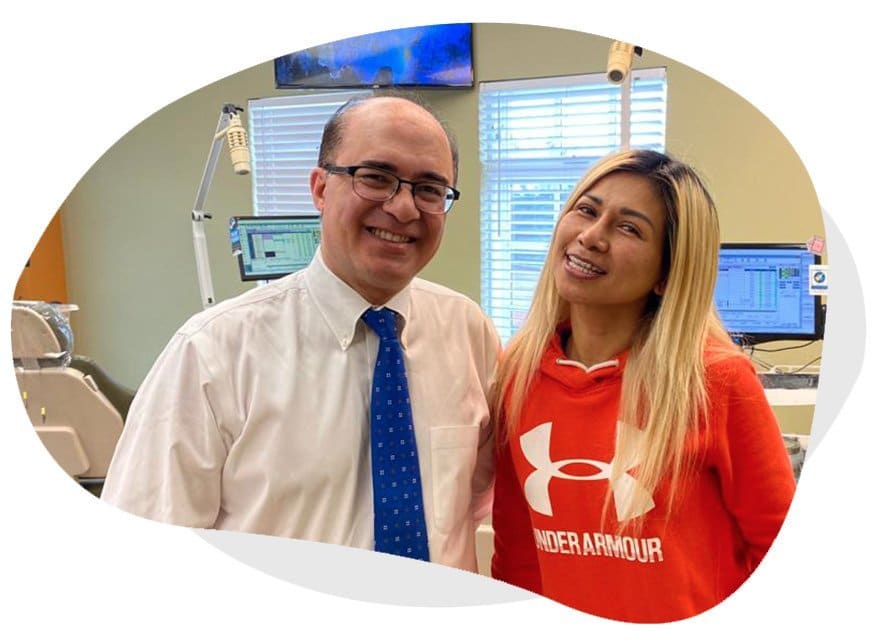
Considering orthodontic treatment — or already in the middle of it — and have questions? You are in the right place. Below you will find answers to the most common questions our patients and their families ask at Dr. Ron Hessamfar and the ABSC team across our Ashburn, Woodbridge, and Alexandria offices. Questions are organized by topic so you can find what you need quickly. If your question is not answered here, contact us directly or book a free consultation — we are happy to help.
Common Orthodontic Questions — Answered by ABSC
Getting Started & Your First Visit
Do I need a referral from my dentist to see an orthodontist?
No. You do not need a referral from your general dentist to book a consultation at ABSC. Anyone can schedule a free, no-obligation consultation directly — no referral required. That said, if your dentist has noticed alignment or bite concerns and referred you, we are happy to coordinate with their office.
How much does the first consultation cost?
Your first consultation at ABSC is completely free — no charge for the clinical examination, iTero™ digital scan, treatment plan presentation, or financial review. You receive all the information you need to make a confident decision without spending a penny. Learn more about what to expect at your first visit.
What happens at my first orthodontic appointment?
At your first ABSC visit, Dr. Hessamfar performs a complete oral examination, takes digital X-rays, captures an iTero™ 3D digital scan of your teeth, and builds a personalized treatment plan. You then receive a full financial breakdown — including insurance benefits, out-of-pocket costs, and monthly payment options — before you leave. In many cases, treatment can begin the same day if you are ready to proceed.
What should I bring to my first appointment?
Bring your completed patient form (available for download on our first visit page), any recent dental X-rays, your dental insurance card, and a list of any current medications or medical conditions. Patients under 18 must be accompanied by a parent or legal guardian. Most importantly — bring your questions.
At what age should my child first see an orthodontist?
The American Association of Orthodontists recommends that all children receive their first orthodontic screening by age 7. At this age, Dr. Hessamfar can identify early signs of crowding, bite problems, and jaw development issues — and either begin early interceptive treatment or monitor growth to determine the ideal time to begin. Early evaluation does not always mean early treatment, but it ensures nothing is missed.
Can I see an orthodontist as an adult, even if I never had braces as a child?
Absolutely. Adults make up a growing proportion of orthodontic patients — there is no age limit for treatment. Bone and teeth can be moved at any age, and ABSC regularly treats patients in their 30s, 40s, 50s, and beyond. Many adults choose Invisalign for its discreet, professional-friendly appearance during treatment.
How do I know if I need orthodontic treatment?
Common signs include crowded or overlapping teeth, noticeable gaps between teeth, difficulty chewing or biting food, jaw pain or clicking, teeth that do not meet properly when biting, or simply a smile you are not confident in. The only way to know for certain is a clinical evaluation — which at ABSC is always free.
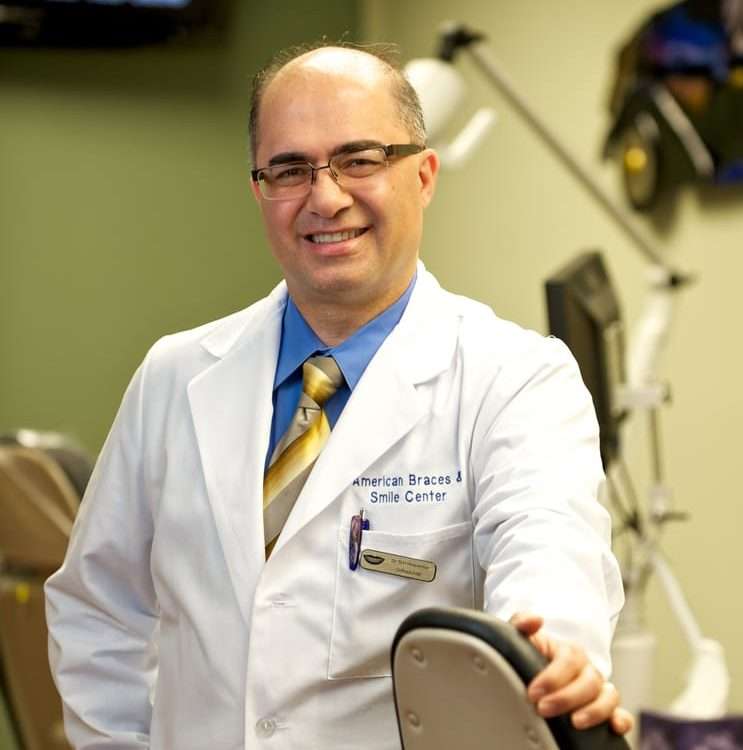
Treatment Options — Braces vs. Invisalign
What is the difference between braces and Invisalign?
Both traditional braces and Invisalign move your teeth gradually toward correct alignment — but they do so differently. Braces use metal or ceramic brackets bonded to teeth, connected by wires that apply continuous pressure. Invisalign uses a series of custom-fabricated clear plastic trays worn over the teeth, changed approximately every one to two weeks. Braces are fixed and cannot be removed; Invisalign aligners are removable. See our full Invisalign vs. braces comparison for a detailed breakdown.
Which is better — braces or Invisalign?
Neither is universally better — the right choice depends on your specific clinical needs, lifestyle, and compliance. Braces are generally the more powerful tool for complex bite corrections and cases where precise tooth control is required. Invisalign is preferred by patients who prioritize discretion, removability, and dietary freedom — and who are committed to wearing aligners 20 to 22 hours daily. Dr. Hessamfar will give you an honest clinical recommendation at your free consultation.
Is Invisalign as effective as braces?
Yes — for mild to moderate alignment and bite corrections, Invisalign achieves results clinically comparable to traditional braces. For more complex bite issues involving significant jaw repositioning, braces may offer greater control. The effectiveness of Invisalign also depends heavily on patient compliance — aligners must be worn 20 to 22 hours per day to achieve treatment targets on schedule.
What types of braces does ABSC offer?
ABSC offers traditional metal braces, ceramic (clear) braces, and Invisalign clear aligners — including Invisalign Teen. Dr. Hessamfar will recommend the most clinically appropriate option for your specific case at your free consultation.
How long does orthodontic treatment take?
Treatment length varies significantly by case. Mild alignment corrections can be achieved in as little as 6 to 12 months. Most average cases take 12 to 24 months. Complex bite corrections involving significant jaw and tooth repositioning may take 24 months or more. Dr. Hessamfar will give you an estimated treatment timeline as part of your personalized treatment plan at your first visit.
Can orthodontics fix my bite, not just straighten my teeth?
Yes. Orthodontic treatment at ABSC addresses both cosmetic alignment and functional bite correction — including overbites, underbites, crossbites, and open bites. Correcting bite problems is often as important as straightening teeth, as untreated bite issues can lead to uneven tooth wear, jaw joint problems, and difficulty chewing over time.
What is the iTero scanner and why does ABSC use it?
The iTero™ Element digital scanner is a radiation-free handheld device that captures thousands of images per second to generate an instant 3D model of your teeth — replacing traditional putty impressions entirely. It is faster, more accurate, and far more comfortable. Patients who begin treatment with an iTero scan experience up to seven times fewer aligner fitting issues than those with traditional impressions. For Invisalign patients, it also generates a Smile Simulation showing your expected results before treatment begins.
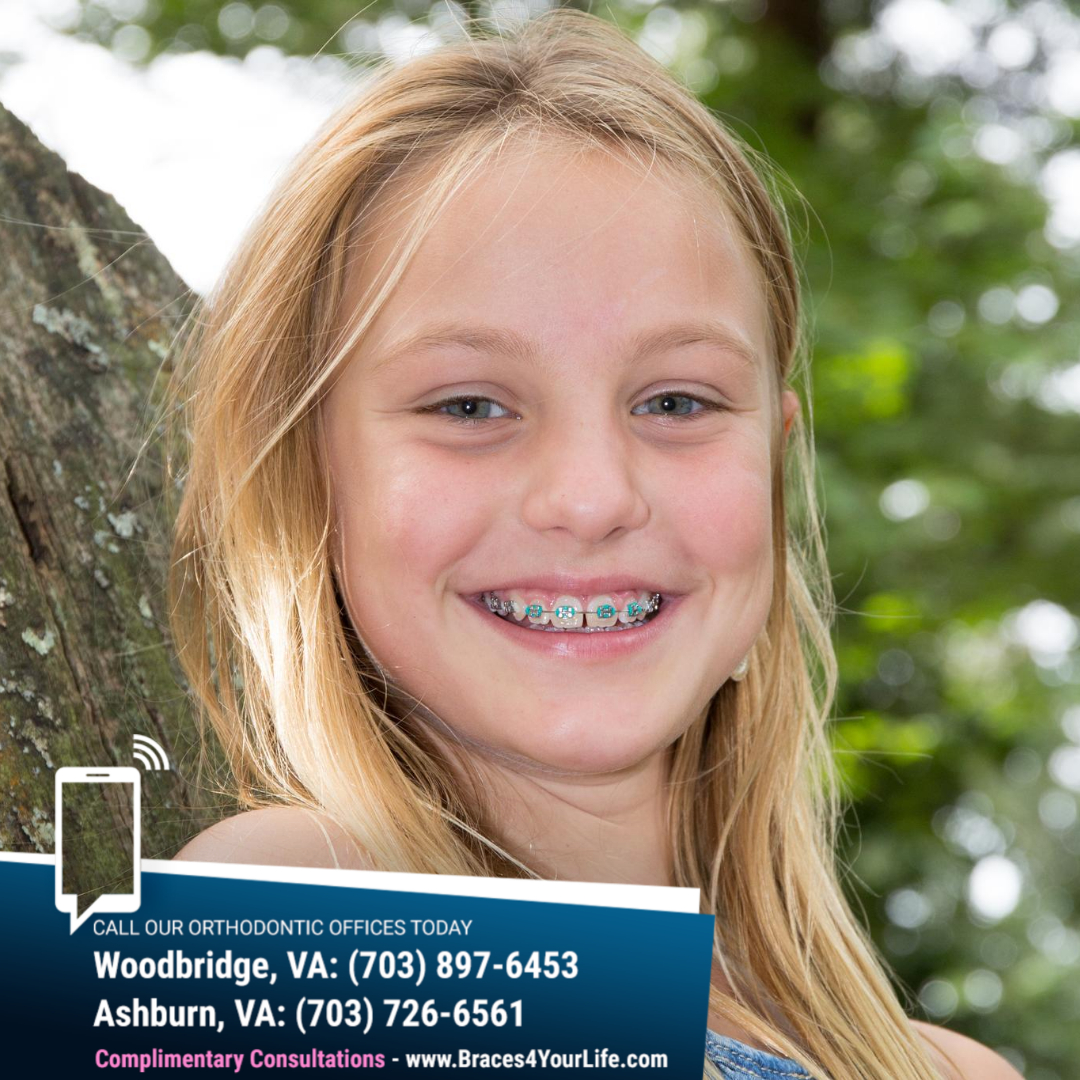
Children & Teen Orthodontics
What is Phase 1 orthodontic treatment?
Phase 1, or early interceptive treatment, refers to orthodontic intervention typically between ages 7 and 10 — before all permanent teeth have erupted. Phase 1 treatment addresses jaw development, skeletal discrepancies, severe crowding, and bite problems while the jaw is still growing and more responsive to correction. Not every child needs Phase 1 treatment — Dr. Hessamfar will assess at your child’s free consultation whether early intervention is clinically indicated or whether monitoring and waiting for Phase 2 (full braces) is the better approach. Learn more about early orthodontic treatment at ABSC.
My child still has baby teeth — can they start orthodontic treatment?
In some cases, yes. Certain jaw expansion, space maintenance, and early corrective treatments are performed while some baby teeth are still present. Dr. Hessamfar will determine at your child’s evaluation whether early treatment is appropriate or whether monitoring growth is the right approach.
What is the difference between Invisalign Teen and regular Invisalign?
Invisalign Teen includes three features not found in standard Invisalign: compliance indicator dots that fade from blue to clear as the aligner is worn (helping parents and Dr. Hessamfar monitor wear), eruption tabs that hold space for teeth still emerging in developing mouths, and extra replacement aligners included in the package in case trays are lost or broken.
Is Invisalign Teen suitable for my child?
Invisalign Teen is generally appropriate for patients who have most or all of their permanent teeth — typically around age 11 to 13 and older. Suitability also depends on case complexity and the patient’s maturity and commitment to wearing aligners consistently. Dr. Hessamfar will assess your teen at their free consultation and give you an honest recommendation.
Will braces affect my child's ability to play sports or musical instruments?
For sports, braces patients should wear an orthodontic mouthguard during contact sports to protect both the braces and their mouth. Invisalign Teen patients simply remove aligners for contact sports and reinsert them immediately after. For musical instruments — particularly wind and brass instruments — there is usually a short adjustment period of a few weeks before normal playing ability returns. Most patients adapt quickly and continue their musical activities throughout treatment without significant disruption.
What foods are off-limits with braces for kids?
With traditional braces, patients should avoid hard foods (raw carrots, apples, hard candies, ice), sticky foods (caramel, gum, toffee), and very chewy foods (bagels, tough meats) — all of which can break brackets or bend wires. Soft foods, most cooked vegetables, dairy, pasta, and anything that can be chewed comfortably without biting force are fine throughout treatment. Visit our living with braces page for a complete food guide.
During Treatment — Life With Braces or Aligners
Do braces hurt?
Braces themselves do not cause sharp pain, but it is normal to experience soreness and pressure for 3 to 5 days after braces are first placed and after each adjustment appointment. This discomfort is a sign that your teeth are moving. Over-the-counter pain relievers like ibuprofen or acetaminophen are effective for managing soreness. The discomfort typically diminishes significantly after the first two to three weeks of treatment as your mouth adjusts.
How do I brush and floss my teeth with braces?
Proper oral hygiene is critical during braces treatment. You should brush after every meal (at minimum twice daily) using a soft-bristled toothbrush at a 45-degree angle to clean above and below the wire. Use floss threaders or a water flosser to clean between teeth and under the wire daily. Visit our detailed brushing and flossing with braces guide for step-by-step instructions.
How long do I need to wear Invisalign aligners each day?
Invisalign aligners must be worn for 20 to 22 hours per day — removing them only to eat, drink anything other than water, and to brush and floss. Wearing aligners fewer than the required hours each day directly slows treatment progress and can cause teeth to shift back, requiring additional trays to correct. Consistency is the single biggest factor in achieving on-schedule Invisalign results.
What should I do if a bracket breaks or a wire pops out?
Call the ABSC office as soon as possible. For a poking wire, you can temporarily use orthodontic wax (available at most pharmacies) to cover the end and prevent irritation until your appointment. Do not attempt to cut the wire yourself. For a completely detached bracket, save it if possible and bring it to your appointment. Visit our living with braces page for guidance on managing common orthodontic issues at home.
How often do I need to come in for appointments during treatment?
Most ABSC patients visit every four to six weeks during active treatment — traditional braces patients for wire adjustments, and Invisalign patients for progress checks and new aligner sets. Appointment visits are generally quick — most routine adjustment visits take 20 to 30 minutes. More involved appointments are scheduled in the afternoon to allow Dr. Hessamfar adequate time.
Can I still eat normally with Invisalign?
Yes — one of the primary advantages of Invisalign is that there are no food restrictions. Simply remove your aligners before eating or drinking anything other than water, enjoy your meal normally, brush your teeth before reinserting the aligners, and continue your day. No banned foods, no broken brackets, no dietary adjustments required.
Will braces or Invisalign affect my speech?
Most patients experience a minor adjustment period of a few days to one to two weeks. With traditional braces, you may notice slight changes as your tongue adjusts to the brackets. With Invisalign, a very slight lisp is common for the first few days with each new set of aligners but resolves quickly as your tongue adapts. Most patients report that their speech feels normal within a week of starting treatment.
Can I play sports with Invisalign?
Yes. Remove your aligners for contact sports and replace them with an appropriate mouthguard. Reinsert your aligners immediately after activity ends. This makes Invisalign especially practical for athletes who play contact or impact sports regularly.
Cost, Insurance & Payment Plans
How much do braces cost in Northern Virginia?
Orthodontic treatment at ABSC typically ranges from $3,000 to $7,000 depending on treatment type, case complexity, and duration. Both braces and Invisalign fall within the same general range — there is no automatic premium for choosing clear aligners over traditional braces. An exact quote for your specific case is provided free of charge at your consultation. Visit our cost and finance page for a full overview.
Does dental insurance cover orthodontic treatment?
Many dental insurance plans include orthodontic benefits that apply to both braces and Invisalign. Coverage varies by plan but typically involves a lifetime maximum benefit of $1,000 to $3,000 for eligible patients. ABSC’s administrative team verifies your specific orthodontic benefits on-site at your consultation and files all insurance claims directly on your behalf — at no extra cost to you.
Can I use my FSA or HSA to pay for braces or Invisalign?
Yes. ABSC accepts Flexible Spending Account (FSA) and Health Savings Account (HSA) payments for all orthodontic treatments. Using these pre-tax funds can meaningfully reduce your effective out-of-pocket cost. Let your treatment coordinator know at your consultation and we will coordinate payment accordingly.
Do you offer monthly payment plans?
Yes. ABSC offers flexible, low monthly payment plans customized to fit your budget — with low or no down payment options available. Our treatment coordinators work with you individually to build a payment schedule that makes treatment manageable for your family. No interest or hidden fees. Learn more on our payment plans page.
Is Invisalign more expensive than traditional braces?
Not at ABSC. Invisalign is priced comparably to traditional braces — both treatments fall within the same $3,000 to $7,000 range. The final cost depends on case complexity, not the appliance type. Many patients who expect Invisalign to cost significantly more are pleasantly surprised to find the prices are nearly identical at the consultation.
Does ABSC offer a military discount?
Yes. ABSC proudly offers a 15% discount on the total cost of orthodontic treatment for active duty service members, veterans, and their immediate family members — applicable to all treatment types. ABSC also has experience handling TRICARE Dental Program benefits and can verify your military dental coverage on-site.
Are there any hidden fees I should know about?
No. The total cost quoted at your consultation includes all routine appointments, adjustments, and standard procedures throughout your treatment plan. There are no surprise charges for routine care added after treatment begins. The only additional costs that could arise would be for non-routine situations such as broken bracket repair due to patient non-compliance with dietary guidelines, or lost Invisalign aligners beyond the included replacement set.
After Treatment — Retainers & Long-Term Results
Will I need a retainer after braces or Invisalign?
Yes — every orthodontic patient requires a retainer after active treatment ends. Without a retainer, teeth will gradually shift back toward their original positions over time. This is not a failure of treatment — it is simply the natural tendency of teeth to move throughout life. Wearing your retainer as prescribed by Dr. Hessamfar is the only way to protect and maintain your results permanently.
How long do I have to wear a retainer?
Dr. Hessamfar will give you specific retainer instructions tailored to your case, but the general guideline for most patients is: full-time wear (20 to 22 hours daily) for the first 6 to 12 months after treatment ends, followed by nighttime-only wear indefinitely. Many orthodontists now recommend lifetime nighttime retainer wear to permanently preserve your results — teeth can shift at any age without retention.
What types of retainers does ABSC use?
ABSC fits patients with custom retainers based on their clinical needs. Options include removable clear retainers (similar in appearance to Invisalign trays, fabricated from your iTero scan for a precise fit), traditional Hawley retainers (wire and acrylic), and fixed/bonded retainers (a thin wire bonded behind the front teeth for permanent retention without requiring patient compliance). Dr. Hessamfar will recommend the most appropriate type for your specific case.
What happens if I stop wearing my retainer?
Teeth will shift. How quickly depends on the individual — some patients experience noticeable movement within weeks of stopping retainer wear; others may take months or years to see significant relapse. If you have lost or stopped wearing your retainer, contact ABSC as soon as possible. In many cases, a new retainer can recapture minor drift without requiring a full retreatment — but the longer you wait, the more movement may occur.
Can I whiten my teeth after braces come off?
Yes — and many patients choose to do so. Once braces are removed and your teeth are professionally cleaned, teeth whitening is generally safe and effective. We recommend consulting with your general dentist for whitening recommendations appropriate for your specific tooth sensitivity and enamel condition. Wait at least two weeks after debanding before beginning any whitening regimen to allow enamel to remineralize.
Will my teeth stay straight forever after treatment?
With consistent retainer wear as directed, yes — your results can be maintained indefinitely. Without proper retention, some degree of shifting is virtually inevitable over years and decades, as teeth are naturally influenced by growth, aging, and habits like tongue posture and grinding. The retainer is the lifelong guardian of your investment.
About ABSC Orthodontics
Is Dr. Hessamfar a specialist, or a general dentist offering braces?
Dr. Ron Hessamfar is a dedicated orthodontic specialist — not a general dentist who offers braces as a side service. He completed dental school, advanced education in general dentistry, and a full three-year orthodontic residency program before entering practice. Orthodontics is his complete clinical focus. He has been recognized as a Top Orthodontist by Northern Virginia Magazine and Washingtonian Magazine.
How long has ABSC been in practice?
ABSC Orthodontics has been serving families across Northern Virginia for over 20 years. In that time, Dr. Hessamfar and the ABSC team have completed thousands of successful orthodontic cases for children, teens, and adults.
How many locations does ABSC have?
ABSC has three convenient orthodontic offices across Northern Virginia: Ashburn (serving Ashburn, Leesburg, Sterling, Herndon, Chantilly, and Reston), Woodbridge (serving Woodbridge, Manassas, Dale City, Dumfries, and Lake Ridge), and Alexandria (serving Alexandria, Fairfax, Springfield, McLean, and Annandale). Each office offers the same full range of services, technology, and care.
Does ABSC treat adults, or only children and teens?
ABSC treats patients of all ages — children, teens, and adults. There is no upper age limit for orthodontic treatment. Adult patients are a growing segment of the ABSC practice, and the team is experienced in addressing the specific considerations that come with adult orthodontics, including periodontal health, existing dental work, and treatment preferences like Invisalign for professional discretion.
Can I read reviews from previous ABSC patients?
Yes. Read patient reviews from ABSC families across Northern Virginia here. ABSC is consistently voted Best Orthodontist in Prince William and Loudoun County.
How do I book a consultation?
Online booking is available at any time at braces4yourlife.com/free-orthodontic-consultation/, or you can call us directly at 703-726-6561. Your first consultation is 100% free and no-obligation.
Still Have Questions? Let’s Talk — Your Consultation Is Free.
The best answers to your specific questions come from a face-to-face conversation with Dr. Hessamfar. Book your free consultation today — no commitment, no pressure, just clarity.