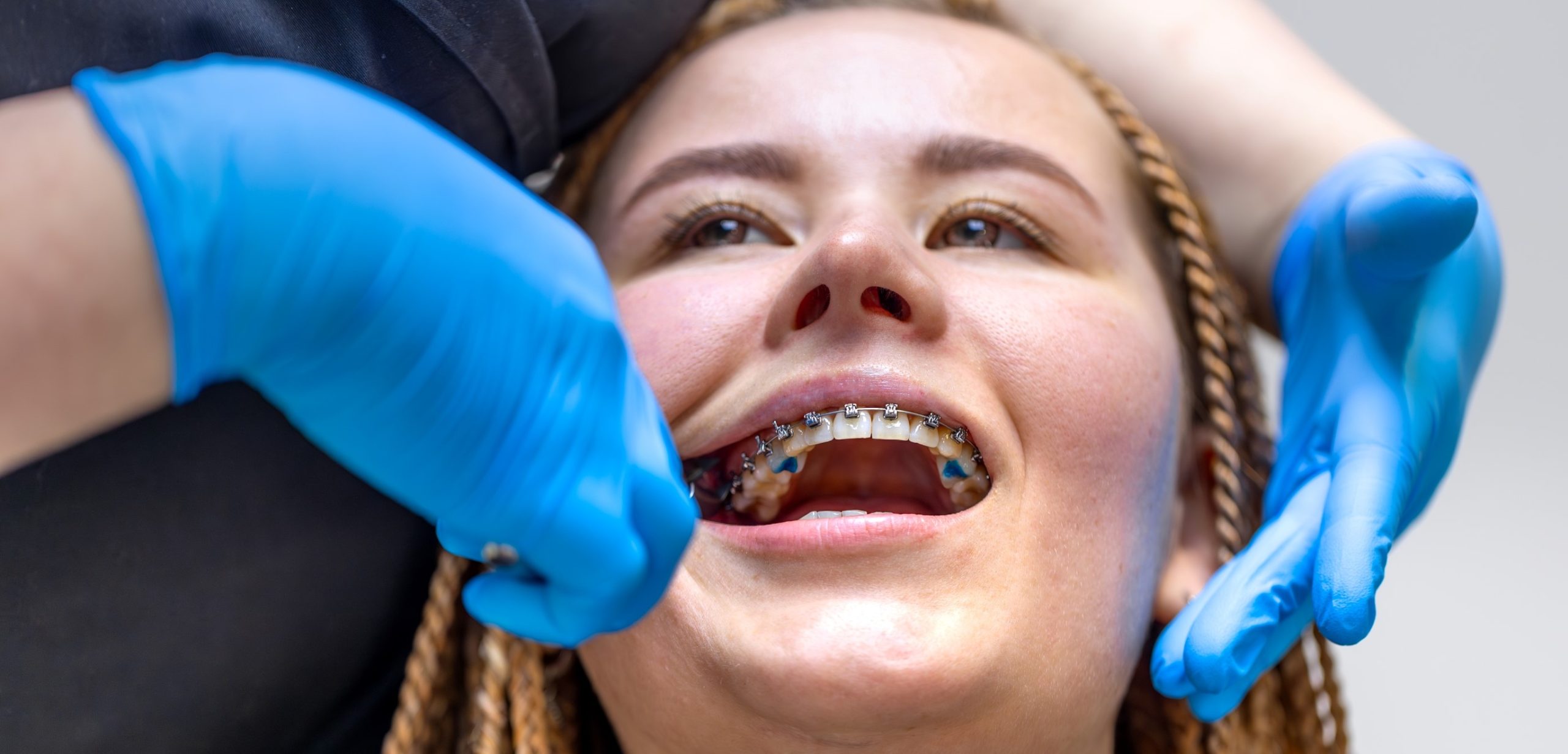
Many patients want straighter teeth but prefer an orthodontic option that’s less visible. That’s exactly what lingual braces offer—also known as braces behind the teeth, since the brackets attach to the back (lingual side) of your teeth instead of the front. Unlike traditional braces, they’re nearly invisible when you smile or speak.
At American Braces & Smile Center, patients from Alexandria, Woodbridge, and Ashburn often ask about braces that go behind the teeth as a discreet alternative to traditional metal braces. With more than 20 years of orthodontic experience, our team helps patients understand whether this hidden-braces option fits their smile and lifestyle.
What Are Lingual Braces (Braces Behind the Teeth)?
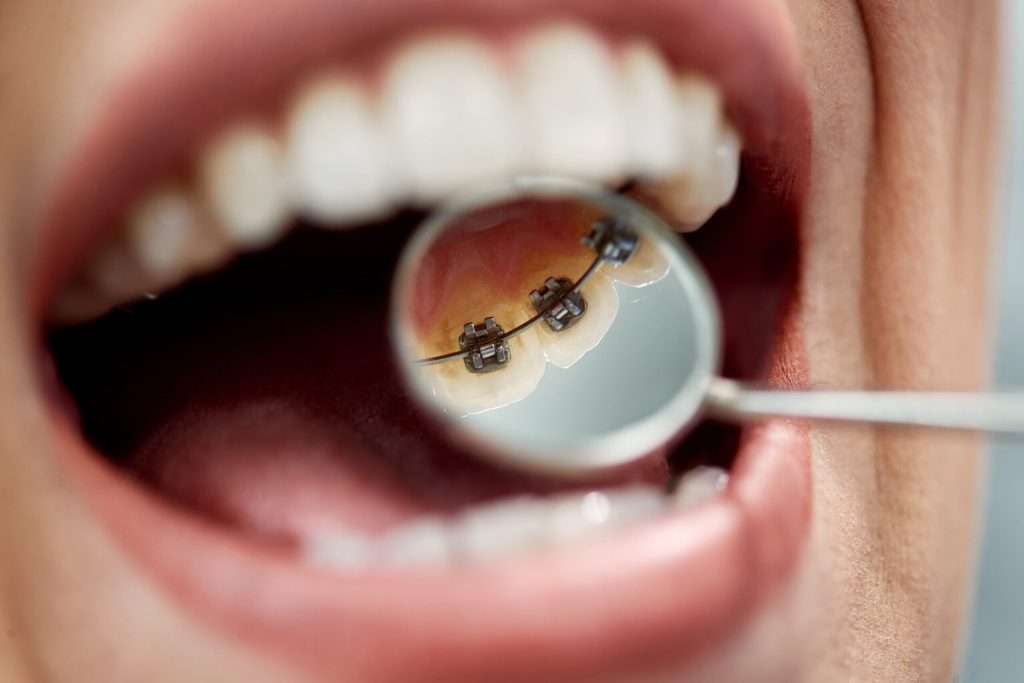
Lingual braces are orthodontic braces attached to the back, or lingual side, of the teeth rather than the front. They’re sometimes searched as “braces behind the teeth,” “braces inside the teeth,” or simply “hidden braces”—all describing the same treatment.
While they function similarly to traditional braces, their placement on the inside of the teeth makes them essentially invisible during daily activities like speaking, working, or socializing.
Like other braces, lingual braces use brackets and wires to apply gentle, continuous pressure that gradually moves teeth into proper alignment—the wire just sits behind your teeth instead of in front of them.
How Do Braces Behind the Teeth Work?
The mechanics are similar to traditional braces. Your orthodontist attaches custom-made brackets to the back of each tooth and connects them with an archwire that runs along the inside surface.
Because every tooth’s inner surface is a different shape, lingual brackets are typically custom-fabricated for each patient—usually from a digital scan of your teeth—rather than using standard off-the-shelf brackets like front braces do. This custom fabrication is part of why lingual braces cost more and why not every orthodontic office offers them.
Over time, the wire applies steady pressure that slowly moves your teeth into the desired position, same as any other fixed braces system.
Lingual Braces vs. Traditional (Front) Braces
| Placement | Lingual: behind the teeth | Traditional: front of the teeth |
| Visibility | Essentially invisible | Visible |
| Brackets | Custom-made per patient | Standard, off-the-shelf |
| Typical Cost | $8,000–$13,000 | $4,000–$7,000 |
| Adjustment Period | Longer—tongue/speech adjustment | Shorter |
Both options are equally effective at moving teeth—the real difference is visibility, cost, and initial comfort.
Lingual Braces vs. Invisalign: What’s the Difference?
Both are discreet, but they’re not the same thing. Invisalign uses removable clear plastic trays; lingual braces are fixed brackets and wire, just placed on the inside of your teeth instead of the outside.
- Lingual braces: fixed, cannot be removed, works 24/7, can treat more complex cases
- Invisalign: removable, requires 20–22 hrs/day of wear discipline, best for mild-to-moderate cases
If you want a completely invisible option but don’t want to worry about remembering to wear trays, lingual braces are often the better fit.
Are Lingual Braces Comfortable?
Because the brackets sit against your tongue instead of your cheeks, most patients notice some adjustment during the first few weeks:
- Mild tongue irritation as it gets used to the brackets
- Temporary changes to speech, especially with certain sounds
- Slight discomfort during the first one to two weeks
Most patients adapt within two to four weeks as the tongue adjusts. Your orthodontist can also provide wax and specific tips to speed up the adjustment period.
Who Is a Good Candidate for Lingual Braces?
Lingual braces can treat many of the same orthodontic problems as traditional braces, including:
- Crowded teeth
- Gaps between teeth
- Bite issues such as overbite or underbite
- Misaligned teeth
Adults and image-conscious teens are the most common candidates, since lingual braces offer effective treatment that stays completely hidden during professional or social situations—including on video calls, unlike Invisalign trays which can sometimes be visible up close.
How Much Do Lingual Braces Cost?
Lingual braces typically run $8,000 to $13,000 in Virginia—more than traditional or clear braces, mainly due to the custom bracket fabrication required for each patient’s teeth. Cost also depends on case complexity and treatment length.
We offer flexible monthly payment plans and work with most orthodontic insurance benefits. See our financing options or full pricing guide for details.
How Long Does Treatment Take?
Treatment time depends on case complexity. Most lingual braces treatments last between 18 and 24 months, though mild cases may finish sooner. Factors that influence treatment time include:
- Severity of alignment issues
- Patient age
- Consistency with orthodontic appointments
Your orthodontist will build a customized treatment plan based on your specific case.
What Our Patients Say
“I’ve been on my orthodontic journey for roughly 4 years, getting my braces off this past June. The staff has treated my family and me with a persistent unwavering kindness and care.”
— Senait J., ABSC Ashburn patient
Read more verified patient reviews.
FAQs About Lingual Braces (Braces Behind the Teeth)
What are braces called that go behind your teeth?
They’re called lingual braces—also commonly searched as “braces behind the teeth” or “hidden braces.” All three refer to the same treatment.
Are there braces that go behind your teeth?
Yes. Lingual braces attach to the back (lingual side) of your teeth, making them essentially invisible from the front.
Are lingual braces as effective as traditional braces?
Yes. Lingual braces use the same orthodontic principles as traditional braces to move teeth into proper alignment—the only real difference is where the brackets sit.
Do braces behind the teeth affect speech?
Some patients notice minor speech changes at first, particularly with certain sounds, but most adjust within two to four weeks.
Are lingual braces more expensive than regular braces?
Yes, typically. Lingual braces cost more than traditional or clear braces because the brackets are custom-made for each patient’s teeth.
Can adults get lingual braces?
Yes. Lingual braces are especially popular with adults who want fully discreet treatment for work or social settings.
How do lingual braces compare to Invisalign?
Lingual braces are fixed and can’t be removed, while Invisalign uses removable trays. Lingual braces can also treat more complex cases than aligners typically handle.
Ready to Start Your Orthodontic Journey?
If you’re interested in lingual braces, our experienced orthodontic team at our Alexandria, Woodbridge, and Ashburn offices can evaluate your smile and help determine whether this hidden braces option is right for you.
Book your free orthodontic consultation today and start your journey toward a confident, healthy smile.