An open bite is essentially the opposite condition of a deep bite, where the front teeth overlap too much rather than not touching at all.
What Is an Open Bite?
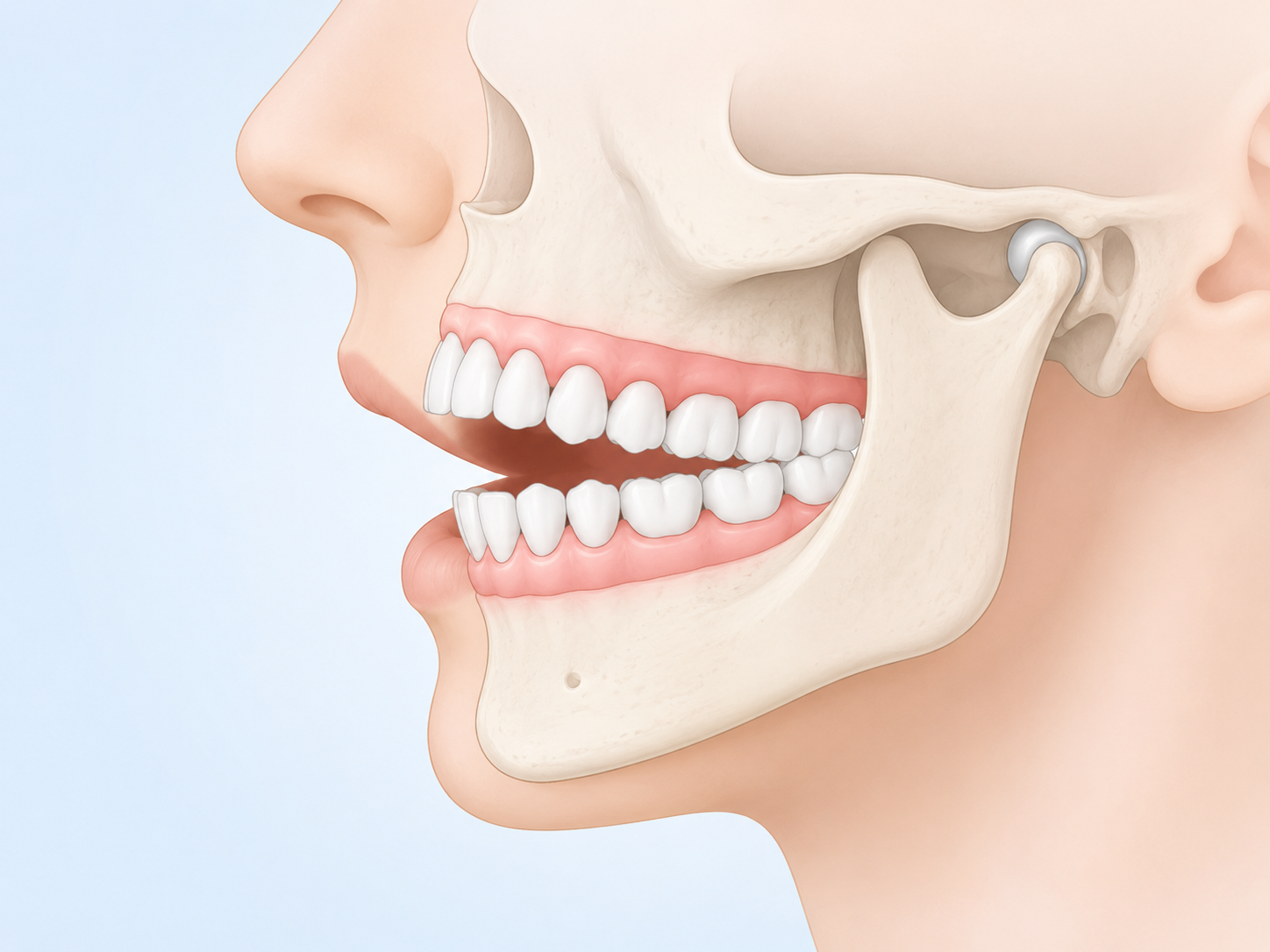
An open bite is a type of malocclusion — the clinical term for a misaligned bite. It happens when the upper and lower teeth don’t make contact in the front (anterior open bite) or in the back (posterior open bite) when the jaw is closed. The most common type is the anterior open bite, where the front teeth visibly don’t touch, leaving a noticeable gap.
You might notice this when biting into food — your back teeth do all the work while your front teeth can’t quite get there. Beyond the cosmetic concern, an open bite can lead to difficulty chewing, speech issues like a lisp, and added strain on the back teeth over time. It’s one of several bite issues covered in our full guide to overbite, underbite, and crossbite treatment.
Common Causes of an Open Bite
Open bites don’t always have one single cause. In many cases, it’s a combination of habits, development, and genetics working together. Here are the most common contributing factors:
- Thumb sucking or pacifier use: Extended use — especially past age 3 or 4 — can push the front teeth forward and upward, preventing them from closing properly.
- Tongue thrusting: When the tongue presses forward against the teeth during swallowing or at rest, it can gradually push the front teeth apart over time.
- Mouth breathing: Chronic mouth breathing, often linked to allergies or nasal obstruction, can alter jaw development and contribute to an open bite.
- Skeletal jaw growth: Sometimes the jaw itself grows at an angle that naturally produces an open bite. This tends to be more complex to treat and may involve jaw growth management in younger patients.
- Genetics: Some people are simply more prone to this bite pattern based on how their teeth and jaw develop.
Identifying the cause matters — especially for younger patients. When the underlying habit or growth pattern is addressed early, treatment tends to go more smoothly and the results last longer.
Why Treating an Open Bite Matters
It’s easy to think of an open bite as purely a cosmetic issue, but it can create real functional problems if left untreated:
- Difficulty biting through certain foods (think sandwiches, apples, or anything that requires front teeth)
- Speech difficulties, particularly with sounds like “s,” “z,” and “th”
- Excessive wear on the back teeth, since they’re absorbing more pressure than they should
- Jaw discomfort or TMJ-related symptoms over time
- Self-consciousness about the appearance of the smile
For parents in the Alexandria, VA area, it’s worth knowing that early evaluation — even before all the permanent teeth come in — can make a real difference. The American Association of Orthodontists recommends children have their first orthodontic evaluation by age 7.
How Is an Open Bite Treated?
Treatment depends on the patient’s age, the severity of the open bite, and what’s causing it. There’s no one-size-fits-all answer, but here are the most common approaches:
Braces
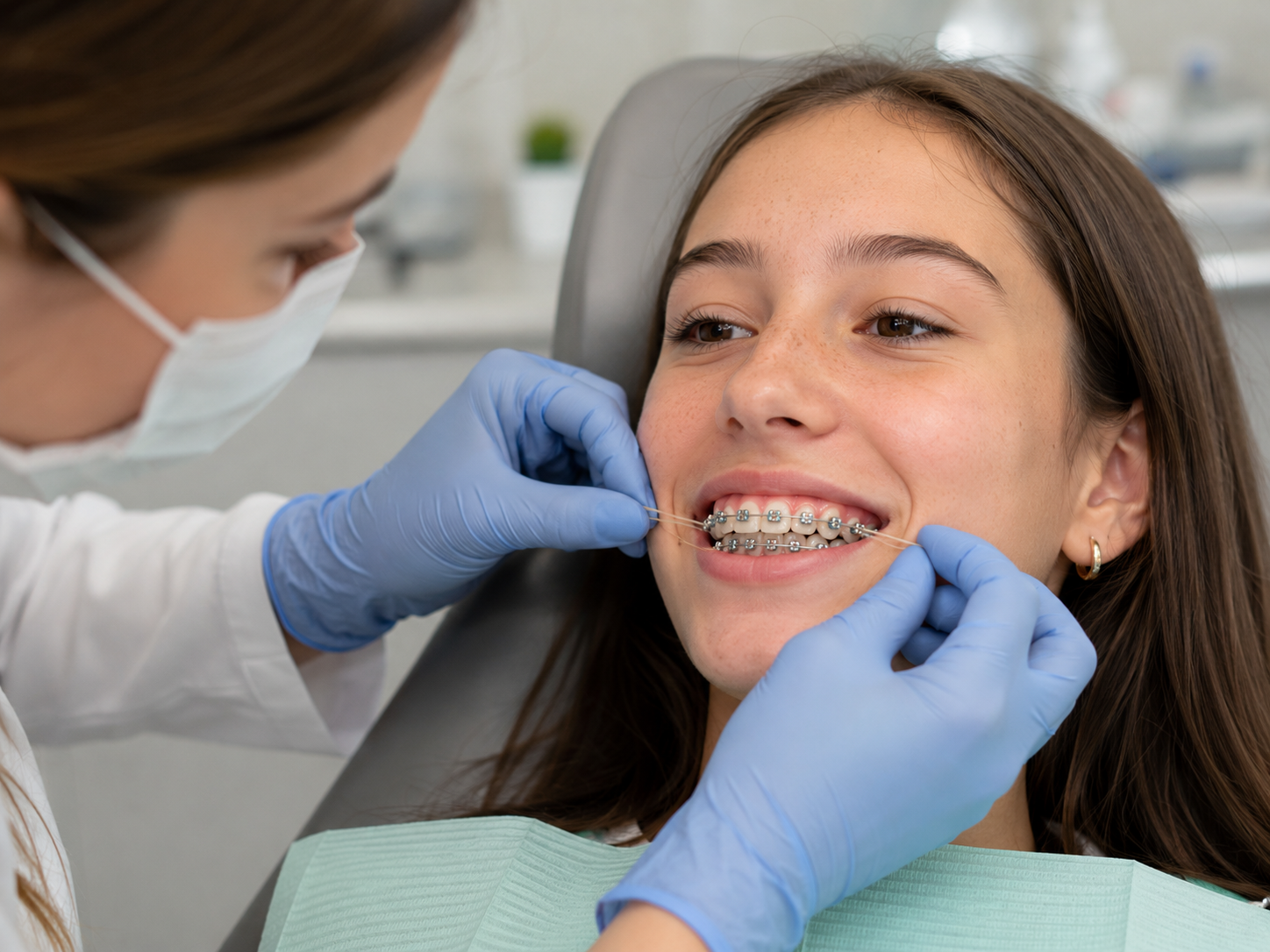
Traditional braces remain one of the most reliable ways to close an open bite. Brackets and wires give your orthodontist precise control over the movement of each tooth. For an open bite, that often means using vertical elastics — small rubber bands that help pull the front teeth down into proper contact. Learn more about how jaw elastics work for bite correction. If you or your teen are considering this route, our braces page covers all the options ABSC offers, from metal to clear braces.
Invisalign
Invisalign has become an increasingly popular option for open bite correction in teens and adults. Clear aligners can be designed to gradually bring the front teeth into alignment, and newer aligner technology has improved results for open bite cases specifically. ABSC offers a free Invisalign consultation — a great starting point if you’re curious whether clear aligners are a fit for your situation.
Habit Appliances
In younger patients where tongue thrusting or thumb sucking is the driver, a removable or fixed appliance may be recommended to help break the habit and allow the bite to correct as the jaw develops. This is often part of early orthodontic treatment before full braces are needed.
Jaw Surgery (in Severe Skeletal Cases)
For adults with a severe skeletal open bite — where the jaw itself is the underlying problem — orthognathic (jaw) surgery may be discussed in combination with braces. This is not common and only relevant in specific situations. Your orthodontist will be direct about whether it’s something worth evaluating.
Open Bite Treatment for Teens
Teens are actually in an ideal window for open bite correction. The jaw is still developing, which means teeth respond faster to treatment, and results tend to be more stable. Braces for teens at ABSC are designed to fit real teenage lifestyles — with options that work around sports, school photos, and everything in between. If your teen has been told they have an open bite, sooner is generally better. Wondering what the full treatment window looks like? See how long bite correction takes with braces for a realistic timeline by case type.
FAQ
Can an open bite fix itself without treatment?
In very young children, mild open bites sometimes improve on their own — especially once habits like thumb sucking or pacifier use stop. However, open bites in older children, teens, and adults rarely self-correct. An orthodontic evaluation can tell you whether watchful waiting is reasonable or whether treatment is the right step.
How long does open bite treatment take?
Treatment length varies depending on the severity of the bite and the method used. Many open bite cases with braces or Invisalign are resolved within 18 to 24 months, though more complex cases may take longer. Your orthodontist will give you a realistic timeline after a full evaluation.
Is an open bite covered by insurance?
Many dental insurance plans include orthodontic coverage that applies to open bite treatment. Coverage varies widely by plan. ABSC’s team can help you review your benefits and understand what’s included before you commit to treatment.
Can adults get treatment for an open bite in Alexandria, VA?
Yes. ABSC’s Alexandria location treats adults regularly, and open bite is one of the conditions we address. Adult treatment is very effective — it may take a bit longer than teen treatment, but the results are just as meaningful. You can reach our Alexandria team at braces4yourlife.com/orthodontist-in-alexandria-va-orthodontics.
Does Invisalign really work for an open bite?
Yes, Invisalign can be effective for many open bite cases, particularly mild to moderate anterior open bites. Results depend on the specifics of your bite and how consistently you wear the aligners. The best way to know if you’re a good candidate is to schedule a consultation — ABSC offers a free Invisalign consultation to get you started.
Ready to Fix Your Open Bite? Start Here.
An open bite is very treatable — and the sooner it’s evaluated, the more options you have. Whether you’re a parent noticing a gap in your child’s smile, a teen dealing with bite issues, or an adult who’s been putting off treatment, the team at American Braces & Smile Center in Alexandria, VA is here to help. We’ll look at your bite, explain exactly what’s going on, and walk you through your options without any pressure. Contact us today to schedule your consultation.