What Is a Crossbite?
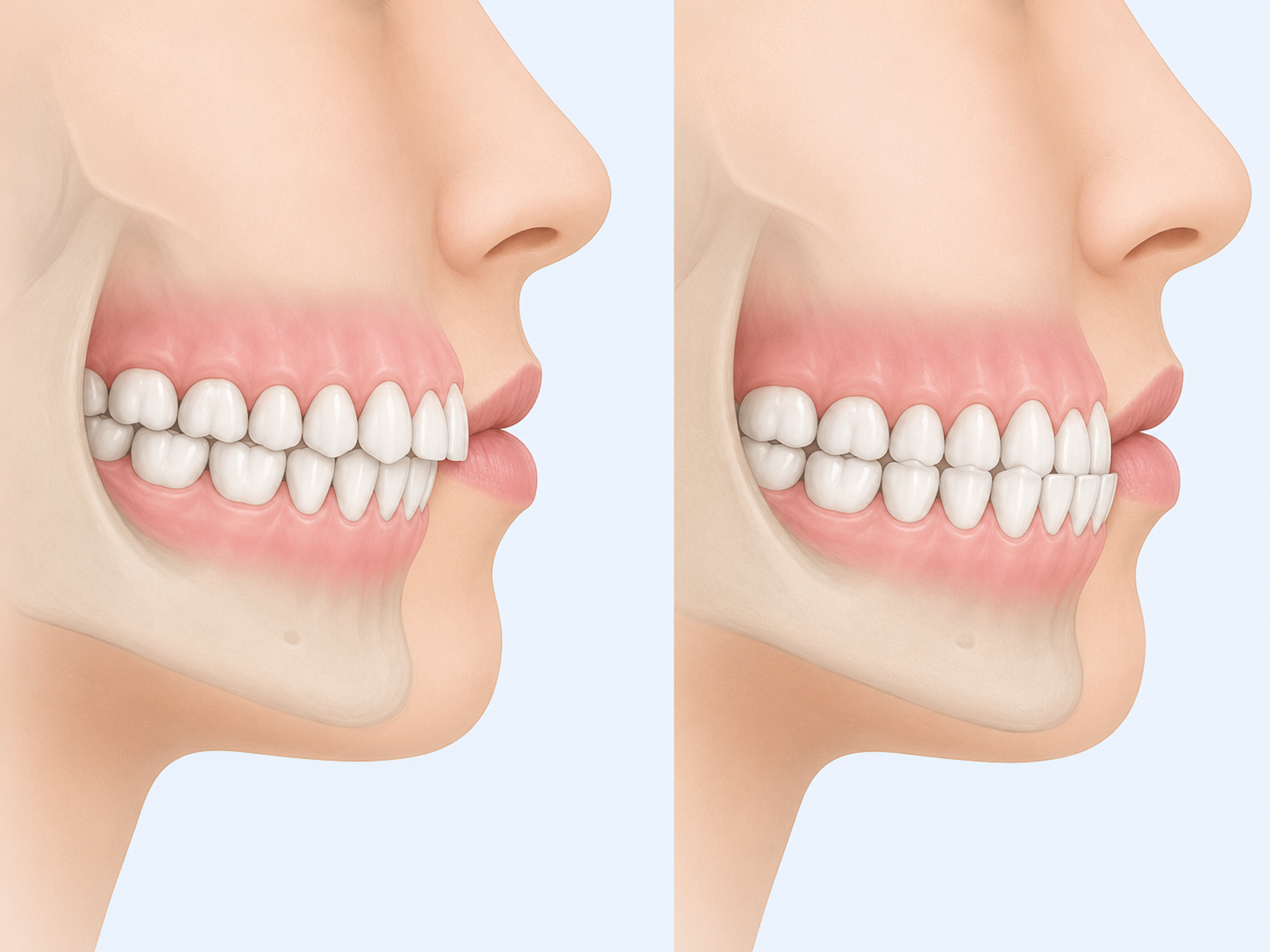
A crossbite is a type of bite misalignment where one or more upper teeth sit inside the lower teeth instead of outside them. Normally, your upper teeth should close slightly over your lower teeth — like a lid on a box. With a crossbite, that relationship is reversed in one or more spots. It’s one of several bite types covered in our full guide to overbite, underbite, and crossbite treatment.
There are two main types:
- Anterior crossbite: One or more front teeth bite behind the lower front teeth. This is sometimes confused with an underbite, but it typically involves just a few teeth rather than the whole jaw.
- Posterior crossbite: One or more back teeth (molars or premolars) sit inside the lower back teeth when biting. This is the more common type and often causes the jaw to shift to one side.
Crossbites can affect just one tooth or several. They can involve the upper jaw being too narrow, individual teeth tipping inward, or a combination of both.
Crossbite is different from a deep bite, which involves excessive vertical overlap rather than teeth sitting on the wrong side of each other.
What Causes a Crossbite?
Crossbites usually develop for one of a few reasons:
- Genetics: Jaw size and tooth size are largely inherited. If a parent had a crossbite or a narrow upper arch, their child may too.
- Delayed baby tooth loss: When baby teeth stay too long, incoming permanent teeth can erupt in the wrong position.
- Prolonged habits: Thumb sucking or pacifier use beyond age 3–4 can affect how the upper jaw develops.
- Mouth breathing: Chronic mouth breathing — often tied to allergies or enlarged tonsils — can lead to a narrower upper arch over time.
- Jaw development differences: Sometimes the upper and lower jaw simply don’t grow at the same rate or in the same direction.
In many cases, crossbites are first noticed during a child’s early mixed dentition stage — when they have a mix of baby and permanent teeth. This is exactly why early orthodontic evaluations matter.
Why Treating a Crossbite Matters
A crossbite isn’t just a cosmetic issue. Left untreated, it can lead to real problems over time:
- Uneven jaw growth: A posterior crossbite that causes the jaw to shift can lead to asymmetrical jaw development in kids, which becomes harder to correct the longer it’s left alone.
- Tooth wear: Teeth that bite incorrectly experience more friction and wear down faster than they should.
- Gum recession: Teeth under abnormal bite forces can sometimes develop gum issues around them.
- Jaw joint stress (TMJ): Shifting the jaw repeatedly to find a comfortable bite can put strain on the temporomandibular joint over time.
- Difficulty chewing or speaking: Some patients notice functional problems, especially with larger or more complex crossbites.
The earlier a crossbite is caught and treated, the more treatment options are available — and the simpler the correction often is. This is especially true for kids and teens, whose jaws are still growing and more responsive to orthodontic guidance.
How to Fix a Crossbite
Treatment depends on a few things: the type of crossbite, how many teeth are involved, the patient’s age, and whether the issue is dental (individual teeth) or skeletal (the jaw itself). Here are the most common approaches:
Palate Expander
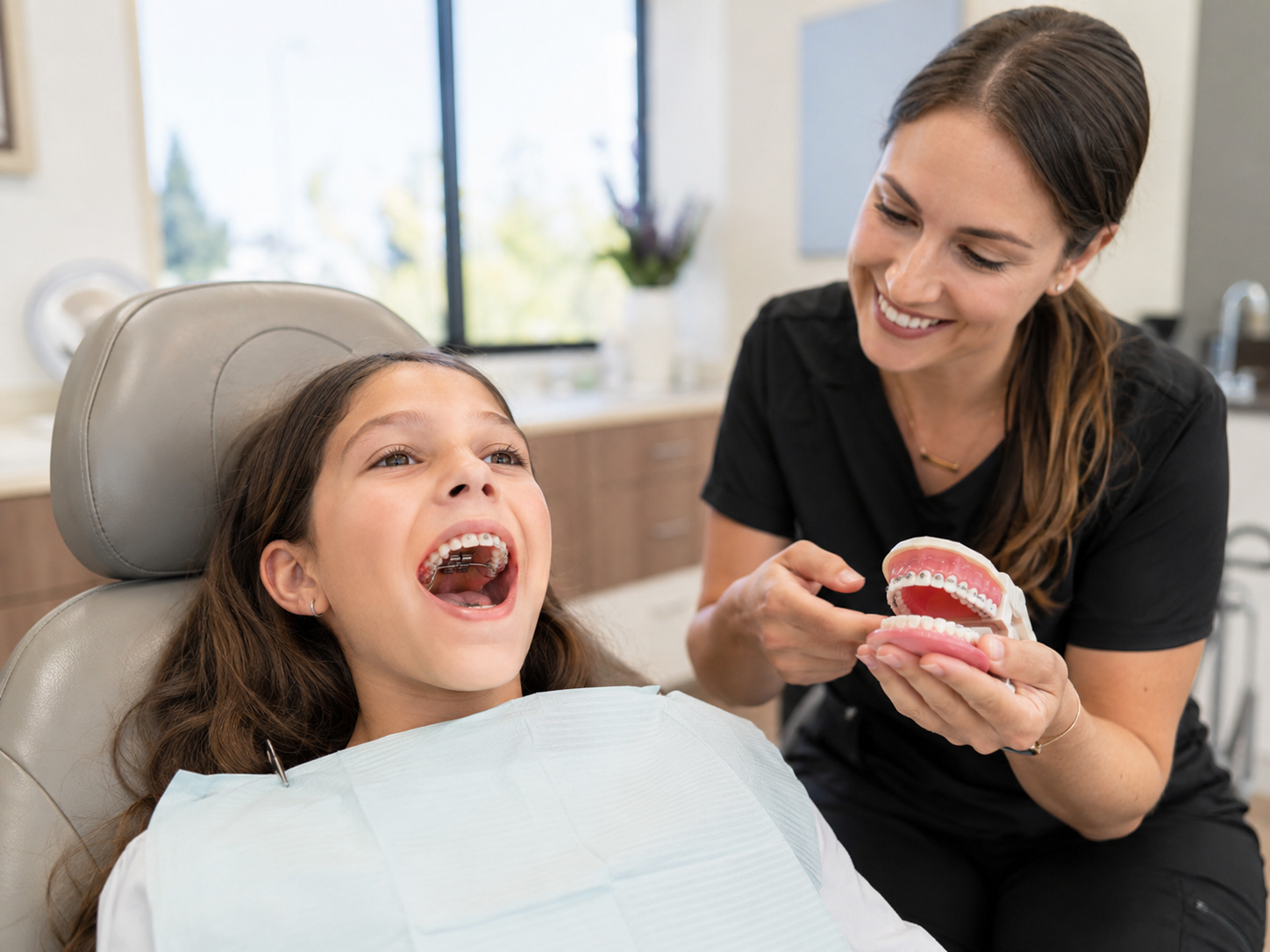
For children and younger teens with a posterior crossbite caused by a narrow upper jaw, a palatal expander is often the first step. This appliance fits on the roof of the mouth and gradually widens the upper arch over several months. Because young jaws are still developing, this process is generally smooth and effective. Addressing the crossbite at this stage can sometimes reduce or simplify the amount of braces treatment needed later.
Braces
Once the jaw width is corrected — or for crossbites that are purely dental — traditional braces are an excellent tool for moving teeth into proper alignment. Braces give the orthodontist precise control over tooth position, which is particularly helpful when multiple teeth are involved. Metal braces, clear braces, and self-ligating options are all available at ABSC.
Invisalign
For mild to moderate crossbites in teens and adults, Invisalign can be a great option. Clear aligners are custom-designed to gently shift teeth into the correct position over time. If you’re curious whether Invisalign might work for your crossbite, schedule a free Invisalign consultation at our Woodbridge office to find out.
Combination Treatment
Some cases — particularly skeletal crossbites in adults — may require a combination of orthodontics and oral surgery to correct the underlying jaw structure. These cases are less common but are handled with thorough planning and referral coordination when needed.
Crossbite in Kids: When to Start Treatment
The American Association of Orthodontists recommends that all children have their first orthodontic evaluation by age 7. At that point, an orthodontist can identify whether a crossbite is forming and whether early intervention makes sense.
Not every child with a crossbite needs treatment right away. Some cases are monitored until more permanent teeth are in. But when a crossbite is causing the jaw to shift or affecting jaw development, early treatment — sometimes called Phase 1 — can prevent more serious problems down the road.
Parents in Woodbridge and across Prince William County bring their kids to ABSC for these early evaluations all the time. It’s a low-pressure visit that gives you real information about what’s happening with your child’s bite — and whether anything needs to be done now or later.
Frequently Asked Questions
Can a crossbite fix itself without treatment?
In very rare cases, a minor crossbite in baby teeth may self-correct as permanent teeth come in. However, most crossbites do not resolve on their own and tend to become more complex with age. An orthodontic evaluation is the best way to know whether watchful waiting or active treatment makes more sense.
Is a crossbite painful?
Not always. Many people with crossbites don’t experience pain, especially in the early stages. Over time, however, untreated crossbites can cause jaw soreness, muscle tension, or tooth sensitivity from uneven wear. If you’re already noticing discomfort, it’s worth getting checked sooner rather than later.
How long does crossbite treatment take?
It depends on the severity and the type of treatment used. A palatal expander phase may take 6–12 months. Full braces or Invisalign treatment for crossbite correction typically ranges from 12 to 24 months, similar to other bite correction timelines. Your orthodontist will give you a more specific estimate after evaluating your case. You can also learn more about what affects orthodontic treatment timelines in our blog.
Does insurance cover crossbite treatment?
Many dental insurance plans with orthodontic benefits cover crossbite treatment, especially for children. Coverage for adults varies by plan. Our team at ABSC can help you understand your benefits and discuss flexible payment options during your consultation.
Can I get a crossbite evaluation in Woodbridge, VA?
Yes. Our Woodbridge orthodontic office at 14130 Noblewood Plaza #107 offers comprehensive bite evaluations for patients of all ages. We welcome new patients and offer complimentary consultations so there’s no barrier to getting the information you need.
Ready to Address Your Crossbite?
Whether you’re a parent wondering about your child’s bite or an adult who has been living with a crossbite for years, you don’t have to figure it out alone. The team at American Braces & Smile Center in Woodbridge, VA has the experience and tools to evaluate your bite and walk you through your options clearly — no pressure, no guesswork. Contact us today to schedule your consultation and take the first step toward a healthier, properly aligned bite.