What Is a “Bad Bite” and Why Does It Matter?
A bad bite happens when your upper and lower teeth don’t come together properly. This includes overbites, deep bites, underbites, crossbites, open bites, and crowded teeth — you can see how each type is diagnosed and treated in our full guide to overbite, underbite, and crossbite treatment. While some cases are mild, others put real stress on your teeth, jaw, and surrounding muscles.
The issue isn’t just cosmetic. How your teeth meet affects how you chew, speak, and even breathe. Over time, a misaligned bite creates wear patterns and strain that compound — meaning the longer it’s left untreated, the harder it can be to correct.
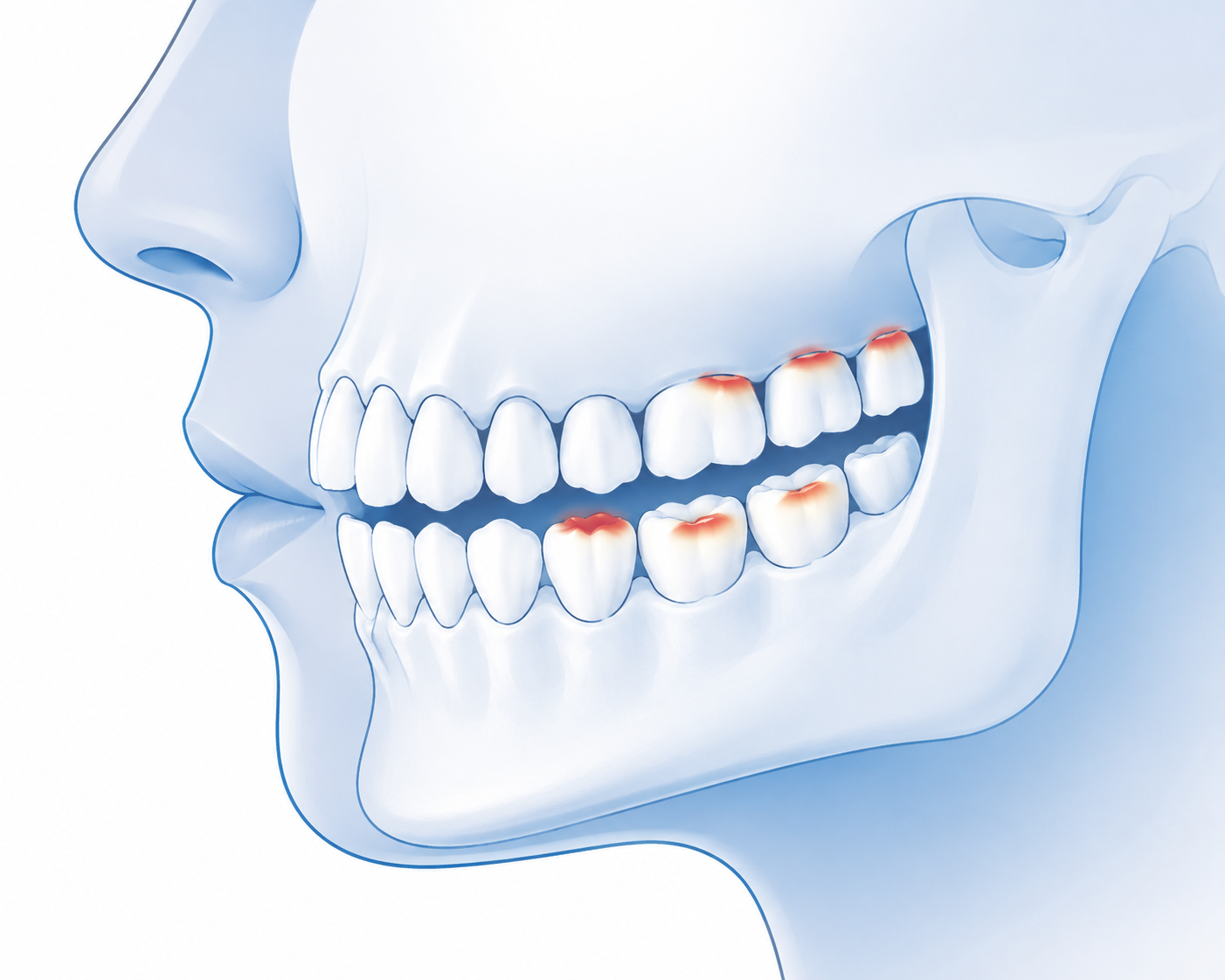
Tooth Wear and Damage Over Time
One of the more direct consequences of an untreated bite is uneven wear on your teeth. When teeth don’t align correctly, certain teeth absorb far more pressure than they should during chewing. This leads to:
- Enamel erosion on specific teeth
- Chipping or cracking, especially on back teeth
- Increased sensitivity as enamel thins
- Worn-down edges that may eventually require restorations
Once enamel is gone, it doesn’t grow back. That’s why orthodontists often recommend addressing bite issues before the damage becomes a dental problem that needs crowns, veneers, or bonding to fix.
Jaw Pain, Headaches, and TMJ Problems
A misaligned bite forces your jaw to compensate every time you chew or close your mouth. Over time, this can irritate the temporomandibular joint (TMJ) — the hinge that connects your jaw to your skull. TMJ problems can show up as:
- Jaw soreness or stiffness, especially in the morning
- Clicking or popping sounds when opening or closing
- Headaches, particularly around the temples
- Neck and shoulder tension linked to jaw strain
Not every bad bite leads to TMJ disorder, but malocclusion is a known contributing factor. Patients who address their bite early are generally less likely to develop chronic jaw discomfort down the road.
Gum Disease and Harder-to-Clean Teeth
Crowded or misaligned teeth are more difficult to brush and floss effectively. Food and plaque tend to get trapped in tight spaces that a toothbrush can’t fully reach. Over time, this raises the risk of:
- Cavities between teeth
- Gum inflammation and early-stage gum disease (gingivitis)
- Bone loss around teeth if gum disease advances
Straightening your teeth isn’t just about looks — it genuinely makes oral hygiene easier. Patients with corrected bites often report better cleaning results and fewer issues at their regular dental checkups. If you’ve been curious about your options for bite correction with braces, that’s a good place to start understanding what treatment might look like.
Speech and Chewing Difficulties
Bite problems can affect how you speak. An open bite or significant overjet can contribute to a lisp or make certain sounds harder to pronounce clearly. While speech therapy can help, the underlying bite issue often needs to be addressed for lasting improvement.
Chewing efficiency also drops when teeth don’t meet properly. This can cause people to favor one side of the mouth, which adds to the uneven wear and jaw strain mentioned earlier. Some patients with significant bite issues find certain foods uncomfortable to eat — not because of dental pain, but because chewing just doesn’t work as well.
Self-Confidence and Quality of Life
This one tends to get overlooked in clinical discussions, but it matters. A noticeable bite misalignment can affect how people feel about their smile, whether in photos, at work, or in everyday conversations. For children and teens especially, these concerns can be tied to self-esteem.
Orthodontic treatment in Woodbridge, VA addresses both the functional and aesthetic sides of a bad bite. Whether you’re looking at Invisalign as a discreet option or want to understand the full range of treatment choices, there’s more flexibility than many patients expect.
Does Age Matter? What About Kids vs. Adults?
Yes — and this is especially relevant for parents who are unsure whether to move forward with early treatment for their child. The American Association of Orthodontists recommends that children have their first orthodontic evaluation by age 7. That’s not necessarily to start treatment, but to catch issues while the jaw is still developing.
Early treatment — sometimes called Phase 1 — can guide jaw growth and reduce the severity of problems that would otherwise require more extensive correction later. For adults, treatment is still very effective, but the timeline may be longer and some structural issues may need additional steps. Understanding what affects your orthodontic treatment timeline — or specifically how long bite correction takes with braces — can help set realistic expectations before you start.
Patients throughout Northern Virginia can visit any of our three offices — Woodbridge, Ashburn, or Alexandria — for a full orthodontic evaluation and personalized treatment plan.
Frequently Asked Questions
Can a bad bite fix itself over time?
No. Bite misalignment doesn’t self-correct. In most cases, the effects worsen gradually over time as teeth shift and wear patterns develop. An orthodontic evaluation is the only way to know the severity and what, if anything, needs to be done.
Is a bad bite always painful?
Not always. Some people have moderate malocclusion for years without obvious pain. The concern is the long-term damage — tooth wear, gum problems, and jaw strain — that builds up even when there are no symptoms yet.
At what age should my child be evaluated for a bite problem?
The AAO recommends a first orthodontic screening by age 7. Early evaluation doesn’t always mean early treatment, but it allows an orthodontist to identify issues while there’s still time to guide jaw development.
Does ABSC treat bite problems at the Woodbridge, VA location?
Yes. The ABSC Woodbridge office at 14130 Noblewood Plaza #107 offers comprehensive bite correction for children, teens, and adults, including braces, Invisalign, and other orthodontic appliances.
How do I know if I need bite correction or just cosmetic straightening?
The best way to find out is through an in-person consultation. An orthodontist can assess how your bite functions, not just how it looks, and recommend the right approach for your specific situation.
Ready to Get Your Bite Evaluated in Woodbridge?
If you’ve been putting off a bite evaluation — for yourself or your child — now is a good time to take that first step. A bad bite doesn’t always announce itself loudly, but the longer it goes unaddressed, the more it can affect your teeth, jaw, and overall oral health. The team at American Braces & Smile Center has helped patients across Northern Virginia — Alexandria, Woodbridge, Ashburn, and surrounding communities — get lasting results with personalized treatment plans. Contact ABSC today to schedule your consultation and find out what bite correction can do for you.