What Is a Bite Problem?
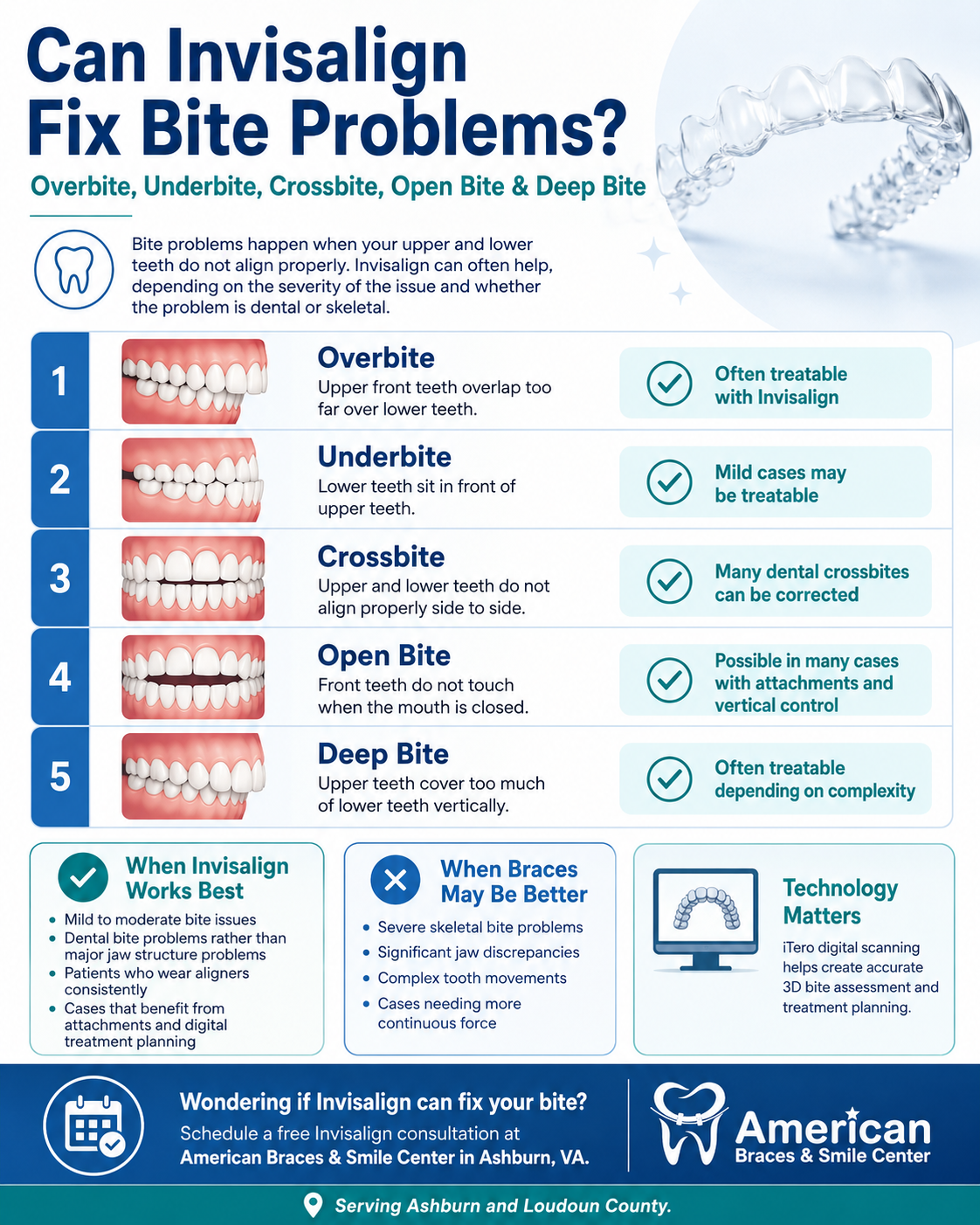
A “bite problem” — or malocclusion — happens when your upper and lower teeth don’t meet the way they should. This can affect how you chew, speak, and even how your jaw feels over time. Some bite issues are minor and mostly cosmetic. Others can cause jaw pain, uneven tooth wear, or difficulty eating.
Common bite problems include:
- Overbite — Upper front teeth overlap too far over the lower teeth
- Underbite — Lower teeth sit in front of the upper teeth
- Crossbite — Upper and lower teeth don’t align properly side to side
- Open bite — Upper and lower front teeth don’t touch when the mouth is closed
- Deep bite — The upper teeth cover too much of the lower teeth vertically
Each of these has different causes and different treatment considerations. The right solution depends on the severity of the issue and the underlying cause.
Can Invisalign Fix These Bite Issues?
In many cases, yes. Invisalign has evolved significantly over the years, and it’s now approved and capable of treating a wide range of bite corrections — not just crowding or spacing. That said, how well it works depends on the complexity of your specific case.
Invisalign for Overbite
An overbite is one of the more common cases Invisalign can address effectively. Clear aligners can gradually shift the teeth and, in some situations, use precision attachments and bite ramps to encourage proper jaw positioning. Mild to moderate overbites respond well to Invisalign treatment. Severe skeletal overbites — where the jaw itself is mispositioned — may require additional orthodontic tools or, in rare cases, surgical evaluation.
Invisalign for Crossbite
A crossbite, where some upper teeth sit inside the lower teeth, can put uneven pressure on your jaw and teeth over time. Invisalign can correct many crossbites, particularly dental crossbites (involving teeth position) rather than skeletal crossbites (involving jaw structure). Attachments placed on specific teeth help the aligners apply the right type of movement to bring the bite into alignment.
Invisalign for Open Bite
Open bites — where front teeth don’t touch — were historically difficult to treat with aligners. Today, Invisalign’s vertical control features and targeted attachments have made it a realistic option for many open bite cases, especially those caused by habits or mild jaw positioning issues.
Invisalign for Underbite
Mild underbites can sometimes be corrected with Invisalign, especially when the issue is dental rather than skeletal. Moderate to severe underbites — particularly those rooted in jaw development — may require additional appliances or, in some cases, a referral for surgical consultation. An in-person orthodontic evaluation is the only way to know for sure.
When Braces May Be the Better Choice
Invisalign is not always the right fit for every bite issue. Some cases — especially those involving significant jaw discrepancies, severe skeletal problems, or complex tooth movements — may respond better to traditional or clear braces. Braces offer continuous, precise force across all teeth simultaneously, which can be an advantage in more complex correction scenarios.
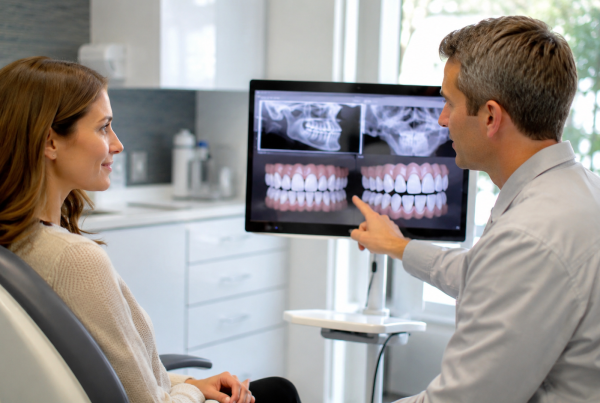
At ABSC, we never push one treatment over another. Our orthodontists take the time to review your X-rays, your bite pattern, and your goals before recommending anything. Some patients end up being great Invisalign candidates. Others start with braces and finish with retainers. It depends entirely on what your teeth and jaw need.
The Role of Technology in Bite Assessment
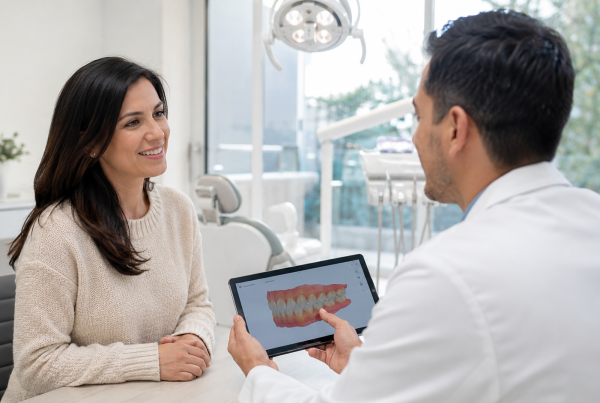
One of the most important steps in evaluating a bite problem is getting an accurate 3D picture of your teeth and jaw. ABSC uses the iTero digital scanner to capture detailed scans without traditional dental impressions. This technology lets your orthodontist see exactly how your bite fits together and simulate potential treatment outcomes before anything begins.
Digital scanning also helps us track progress throughout your Invisalign treatment — so if adjustments are needed at any point, we can catch them early and respond accordingly.
What to Expect During Invisalign Bite Correction
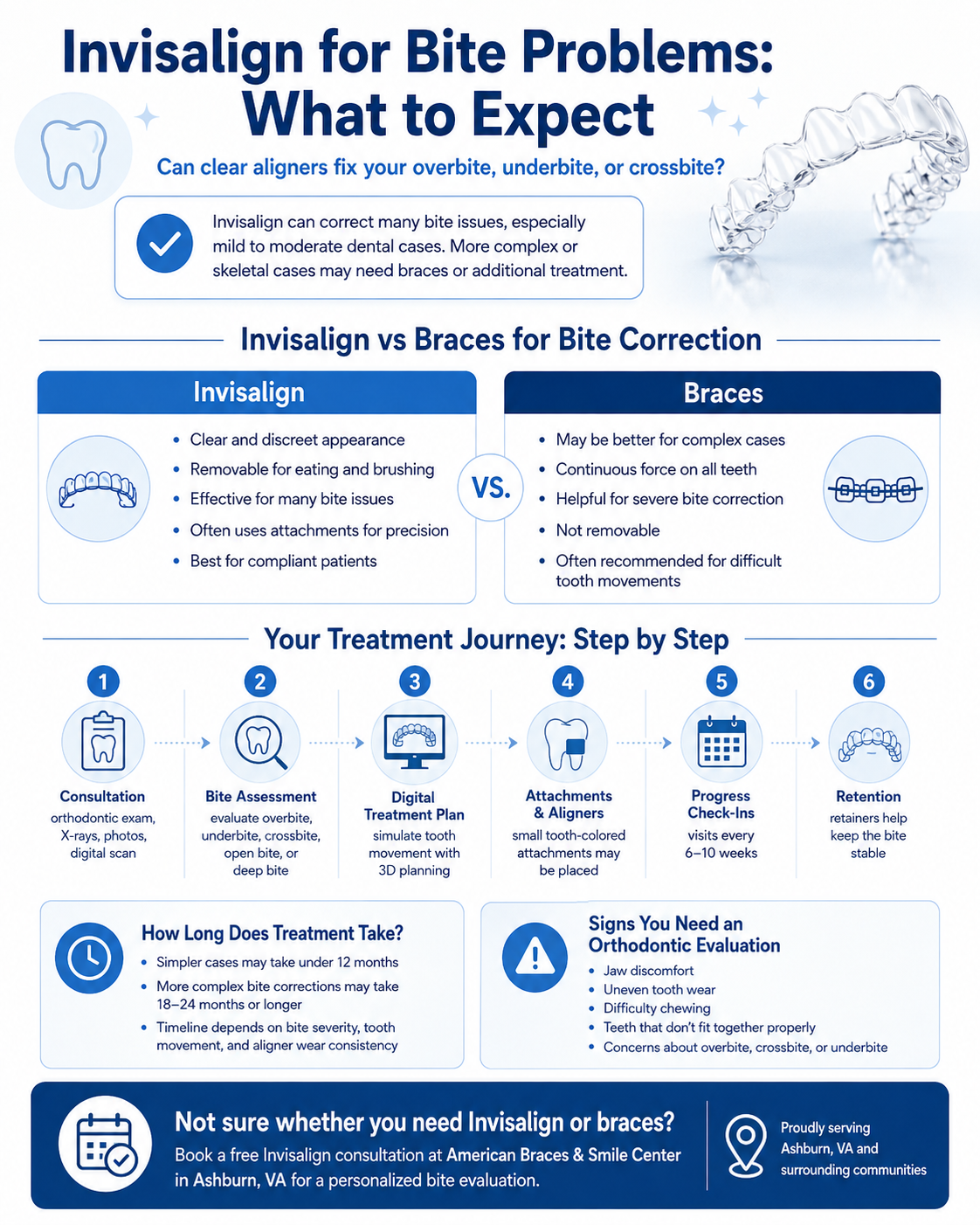
If you’re approved for Invisalign to correct a bite problem, here’s a general idea of what the process looks like:
- Consultation and records — X-rays, photos, and a digital scan of your teeth
- Treatment planning — Your orthodontist maps out every tooth movement using ClinCheck software
- Attachments — Small tooth-colored dots bonded to certain teeth to help aligners apply more precise forces
- Aligner series — You’ll wear each set of aligners for about 1–2 weeks, progressing through the series
- Check-ins — Regular visits (typically every 6–10 weeks) to monitor bite correction progress
- Retention — Once treatment is complete, retainers help keep your bite stable long term
Treatment length varies. Simple cases might wrap up in under a year. More complex bite corrections can take 18 to 24 months or longer. Your orthodontist will give you a realistic timeline based on your specific case. You can also learn more about what affects treatment duration in our article on how long orthodontic treatment takes.
Frequently Asked Questions
Can Invisalign fix a bad overbite?
Invisalign can correct mild to moderate overbites in many patients. Severe cases — especially those involving jaw structure rather than just tooth position — may need additional treatment beyond aligners alone. A consultation is the best way to find out where you stand.
Is Invisalign good for crossbite correction?
Yes, for many dental crossbites, Invisalign is an effective treatment option. Attachments help the aligners move specific teeth into the correct position. Skeletal crossbites involving jaw structure are more complex and may require a different approach.
How do I know if my bite problem needs braces or Invisalign?
The only way to know for sure is to see an orthodontist. During your consultation, your orthodontist will review your bite, jaw alignment, and overall dental health to recommend the most appropriate treatment.
Does ABSC offer free consultations for bite problems in Ashburn?
Yes. American Braces & Smile Center offers free Invisalign consultations at our Ashburn, VA location. You’ll meet with an orthodontist, have your bite evaluated, and receive a personalized treatment recommendation — no commitment required.
Will I need attachments if I use Invisalign for a bite issue?
Most bite correction cases with Invisalign do require attachments. These are small, tooth-colored bumps bonded to specific teeth that help the aligners achieve more complex movements. They’re barely noticeable and are removed once treatment is complete.
Ready to Find Out If Invisalign Can Fix Your Bite?
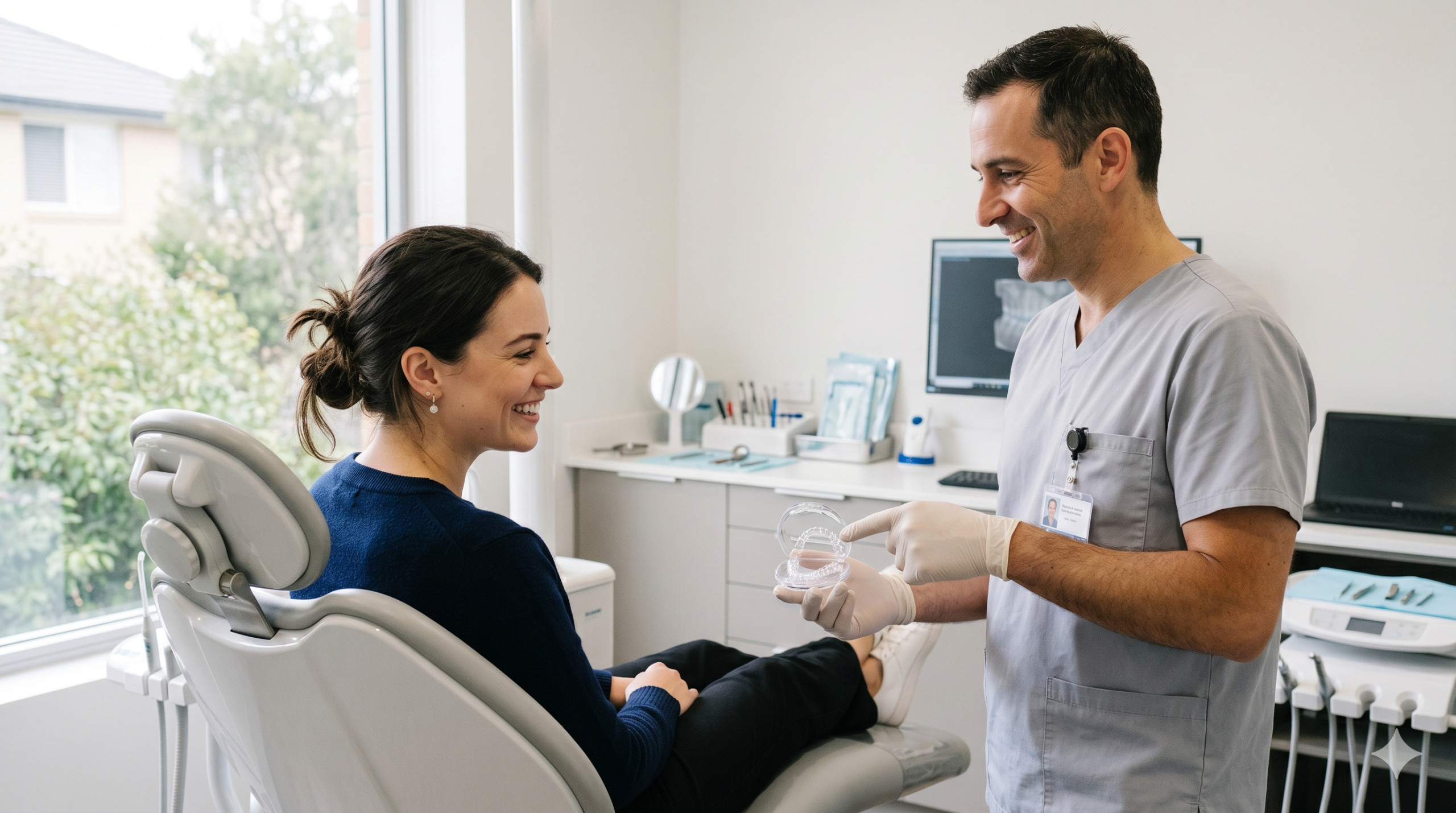
If you’ve been living with an overbite, crossbite, or another bite issue and you’re curious whether Invisalign could help, the first step is a conversation with an experienced orthodontist.
At American Braces & Smile Center in Ashburn, VA, we offer a free Invisalign consultation where we’ll take a close look at your bite, walk you through your options, and give you an honest recommendation — whether that’s Invisalign, braces, or something else. There’s no pressure, no obligation, and no guesswork. Just real answers from an orthodontic team that’s been serving Loudoun County and Northern Virginia for over 20 years.