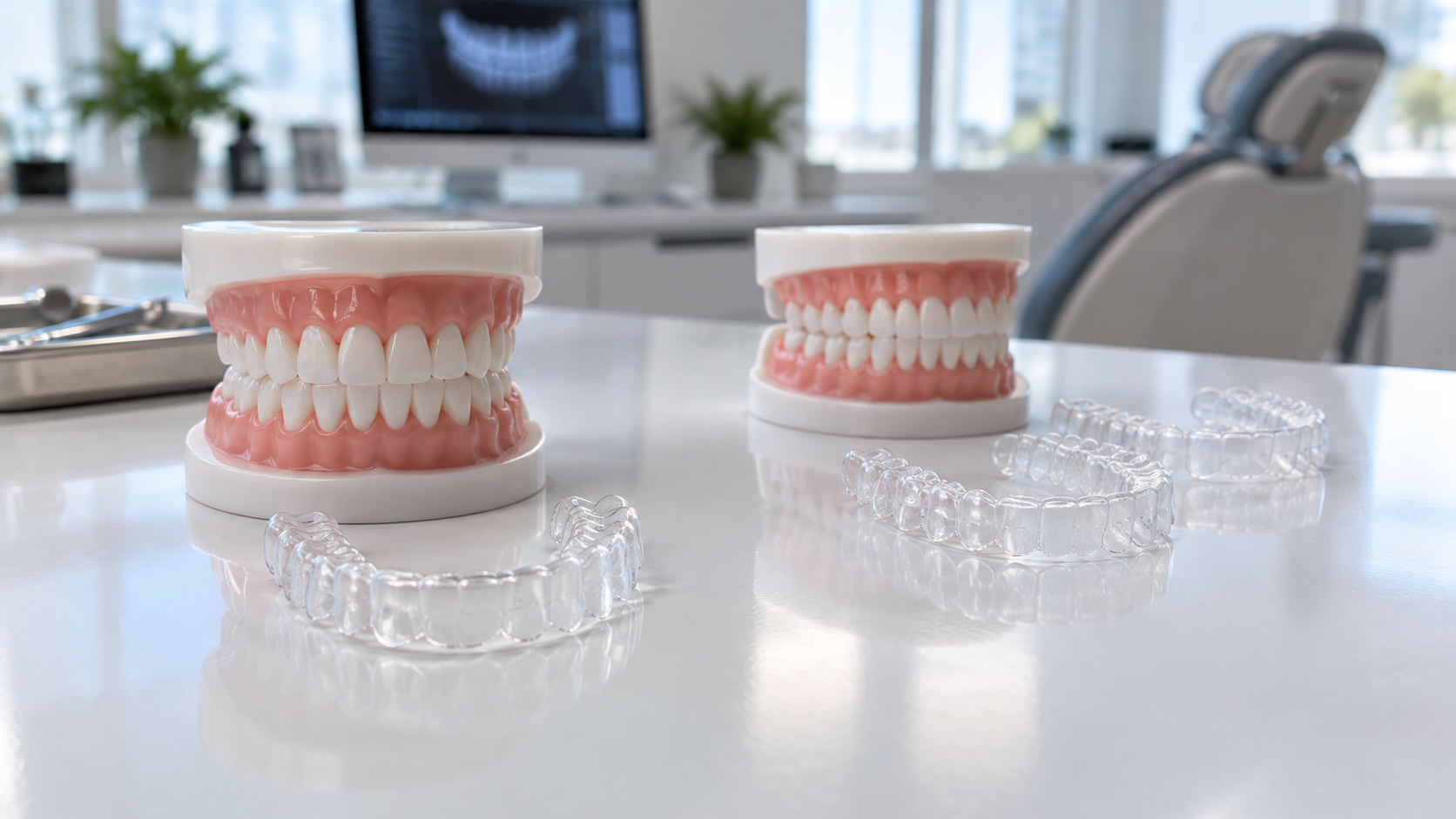
Many patients ask whether retainers and Invisalign do the same thing. While both involve clear trays, they serve very different purposes. Understanding the difference between retainers and Invisalign can help you avoid confusion and protect your smile long-term.
Patients from Alexandria, Woodbridge, and Ashburn, VA often visit American Braces & Smile Center with questions about post-treatment care or clear aligner options. With over 20 years of experience serving Northern Virginia families, our orthodontic team helps patients choose the right solution for their needs.
What Is a Retainer?
A retainer is designed to maintain tooth alignment after orthodontic treatment. Once braces or Invisalign move your teeth into position, retainers keep them from shifting back.
- Used after braces or aligners finish moving your teeth
- Maintains the alignment you already have
- Not designed to move teeth
- Usually just one or two trays, worn on a maintenance schedule
Retainers are essential for protecting the results of orthodontic treatment—skipping them is the single most common reason a finished smile drifts back out of alignment.
What Is Invisalign?
Invisalign is a clear aligner system designed to actively move teeth into better alignment. It uses a series of custom trays that gradually apply pressure to shift teeth over time.
- Used to straighten teeth, not just maintain them
- Gradually moves teeth through a series of trays (often 20–40+ over treatment)
- Requires 20–22 hours of daily wear to stay on schedule
- New tray every one to two weeks
Invisalign is popular among teens and adults seeking a discreet way to straighten teeth without metal brackets.
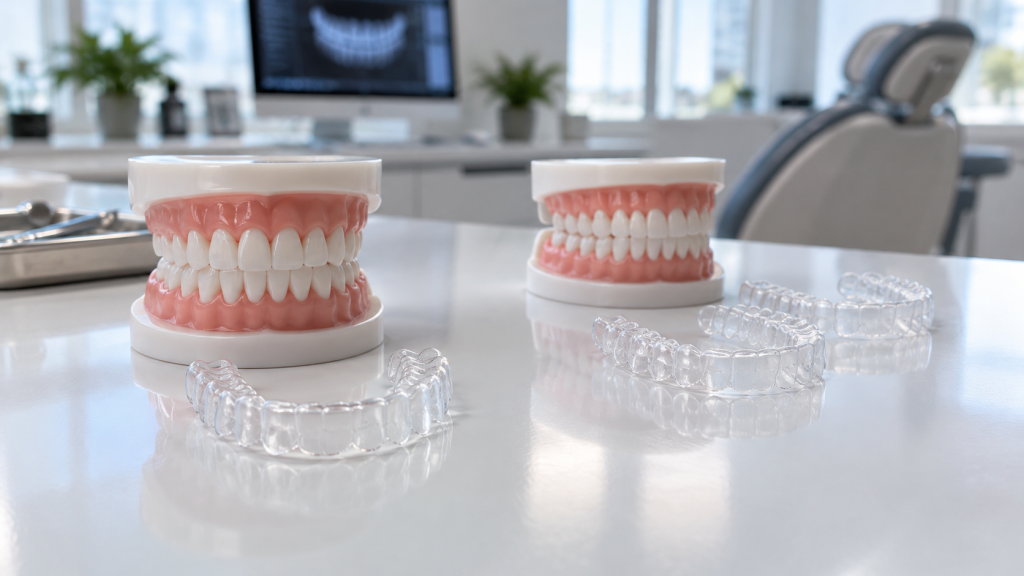
Key Differences Between Retainers and Invisalign
| Purpose | Retainers maintain alignment | Invisalign moves teeth |
| When Used | After treatment | During treatment |
| Number of Trays | Usually one or two | Multiple trays over time |
| Wear Schedule | Nightly, long-term | 20–22 hrs/day during active treatment |
| Typical Cost | $200–$600 | $3,000–$6,500 |
Can Retainers Move Teeth Like Invisalign?
No. Retainers are not designed to move teeth. Attempting to use a retainer to shift teeth can cause discomfort and damage to the retainer or your bite.
If your teeth have shifted since finishing treatment, Invisalign or braces may be needed to correct the movement—not a new retainer.
How Long Do You Wear a Retainer?
Most patients wear a retainer full-time for the first few months after treatment, then transition to nighttime-only wear. Many orthodontists, including our team, recommend indefinite nighttime wear—teeth can shift at any age, even decades after braces.
- First 3–6 months: full-time wear except eating/brushing
- After that: nights only, ongoing
- If you stop wearing it: teeth can begin shifting within weeks
Do You Need Both Invisalign and a Retainer?
Yes. After completing Invisalign treatment, patients must wear retainers to maintain their results—just like after braces. Many patients are surprised to learn that retainers are a lifelong part of orthodontic care, not a one-time step.
Which Option Is Right for You?
- Choose Invisalign if you want to straighten or correct tooth alignment
- Choose a retainer if you’ve completed treatment and want to maintain results
An orthodontic consultation is the best way to determine what you need.
What Our Patients Say
“Dr. Ron Hessamfar is the BEST orthodontist! I’ve been seeing Dr. Ron for a while now, following my Invisalign journey with him a couple of years ago.”
— Lily G., ABSC Woodbridge patient
Read more verified patient reviews.
FAQs About Retainers vs. Invisalign
Can I use Invisalign as a retainer?
No. Invisalign trays are part of active treatment and aren’t designed for long-term retention. You’ll get a separate retainer once treatment finishes.
How long do I need to wear a retainer?
Most patients need nighttime retainer wear indefinitely to prevent shifting—your teeth can move at any age.
Is Invisalign more expensive than retainers?
Yes. Invisalign involves active treatment and multiple aligners ($3,000–$6,500), while retainers are a much lower-cost maintenance device ($200–$600).
What if my retainer no longer fits?
Contact your orthodontist as soon as possible—a retainer that no longer fits usually means your teeth have already started to shift.
Can Invisalign fix teeth that shifted after braces?
Yes. Invisalign can often correct minor to moderate shifting that happened after retainer wear lapsed.
How much does a replacement retainer cost?
Replacement retainers typically run $150–$300 depending on the type. It’s worth asking about this at your consultation if yours is lost or broken.
Not Sure Which You Need?
If you’re unsure whether you need Invisalign or a retainer and live near our Alexandria, Woodbridge, or Ashburn offices, our orthodontic team is here to help.
Book your free orthodontic consultation and get personalized guidance.