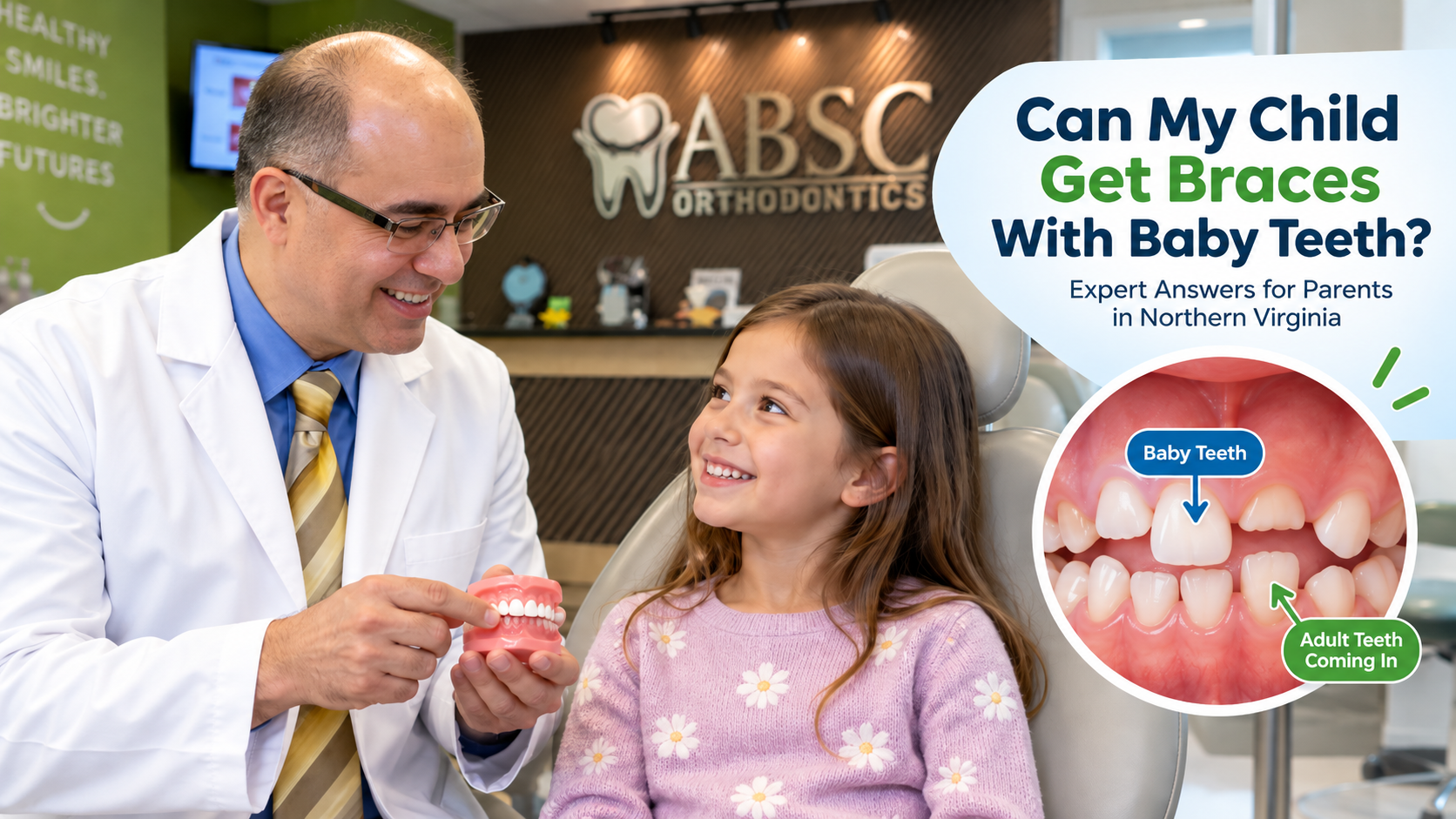
If someone tells you your child should wait until all of their permanent teeth are in before seeing an orthodontist, that’s simply not correct. In fact, waiting until every permanent tooth has come in could do more harm than good—many orthodontic problems are easier to correct while some baby teeth are still present.
Can You Get Braces With Baby Teeth?
Yes. Some children need early orthodontic treatment (often called Phase 1) while they still have baby teeth. This isn’t about starting braces early for no reason—it’s about guiding jaw growth and creating space for permanent teeth while the jaw is still developing. Not every child needs this, but for those who do, timing matters.
There’s a Lot More Going On Than Meets the Eye
A child’s mouth is a busy place. Around age 6, the first permanent molars appear, and an exchange of teeth begins as baby teeth fall out and are replaced by larger permanent teeth—usually in a predictable order. Unless it isn’t.
The gums hide about two-thirds of each tooth, along with the bone that holds teeth in place, which can mask developing problems. Parents can watch for a few clues:
- Early or late loss of baby teeth
- Trouble chewing or biting
- Speech difficulties
- Mouth-breathing
If these go unaddressed until a child has all their permanent teeth and growth is essentially complete, correcting the problem can be more difficult than if treatment had started earlier.
Orthodontic Treatment Is About a Healthy Bite—The Smile Is a Bonus
The goal of orthodontic treatment is making sure the bite is right, so upper and lower teeth fit together properly. Timing depends on your child’s individual needs.
Some children can wait until they have most of their permanent teeth. Others benefit from growth guidance while some baby teeth are still present, creating enough room in the jaw for permanent teeth to come in correctly. Once teeth and jaws are aligned, a great smile is the natural result.
Dentists vs. Orthodontists: Different Focus
Both work in the mouth, but their focus differs. Dentists assess overall oral health—cavities, gum disease, hygiene—and use “bite wing” X-rays for a specific section of teeth. Orthodontic evaluation may not be their main focus.
Orthodontists specialize in the bite. We use panoramic X-rays to see all the teeth above and below the gums, and the jaws, at once. If your dentist hasn’t referred you to an orthodontist, you don’t need a referral—we see patients directly.
What the Experts Say: Age 7
The American Association of Orthodontists recommends a first orthodontic evaluation no later than age 7. That doesn’t mean treatment starts then—it means a specialist gets an early look and can flag anything worth watching or treating.
So to directly answer the question: no, you don’t need to wait until your child has lost all their baby teeth before seeing an orthodontist. It’s fine to come in as soon as you notice a potential issue, even if your child is younger than 7.
What Our Patients Say
“I honestly can’t thank this orthodontist and their team enough for the incredible care I received.”
— Eyot M., ABSC Alexandria patient
Read more verified patient reviews.
FAQs About Kids’ Orthodontic Timing
Can you get braces with baby teeth still in?
Yes. Early treatment (Phase 1) can start while some baby teeth are present, typically to guide jaw growth or create space for permanent teeth—not full braces on baby teeth themselves.
Can you get braces if your permanent teeth are still coming in?
Often, yes. Many patients start orthodontic treatment while permanent teeth are still emerging, especially for younger children under early treatment plans.
What age should my child first see an orthodontist?
The AAO recommends a first evaluation by age 7, even if treatment isn’t needed right away.
Does my dentist need to refer us to an orthodontist?
No. You can schedule directly with an orthodontist—no referral required.
What if my child needs braces before losing all their baby teeth?
That’s not unusual. Early treatment addresses jaw growth and spacing issues at the right developmental window, before waiting could make treatment more complicated later.
Ready for an Evaluation?
We’d love to meet you at one of our offices in Ashburn, Woodbridge, or Alexandria, VA.