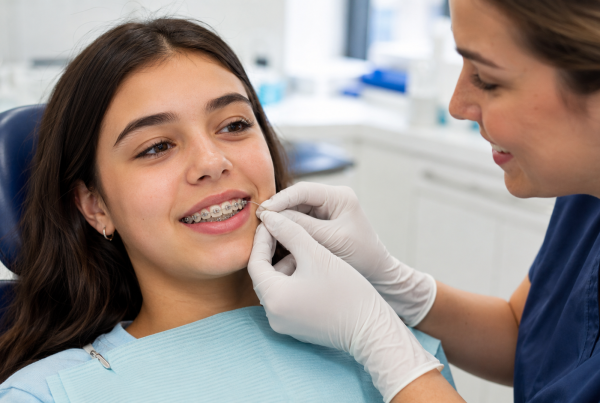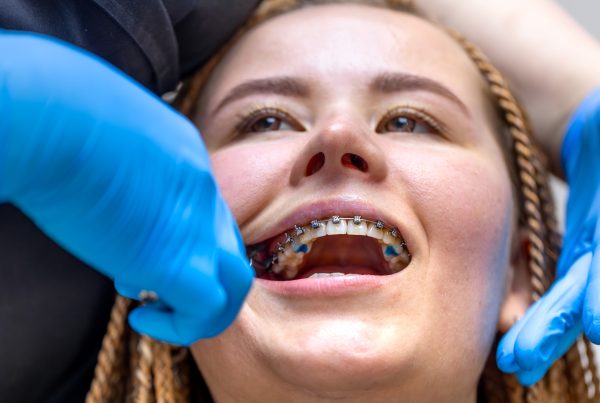
Patients from Alexandria, Woodbridge, and Ashburn, VA often ask how to brush and floss properly with braces. With the right tools and habits, maintaining a healthy smile throughout orthodontic treatment is completely achievable.
Why Oral Hygiene Matters With Braces
Braces create small spaces where plaque and food particles can build up quickly. Without proper care, this can lead to:
- White spots on teeth
- Cavities
- Gum inflammation
- Bad breath
Patients who maintain good hygiene throughout treatment often enjoy smoother, faster progress toward their final results.
How to Brush Your Teeth With Braces
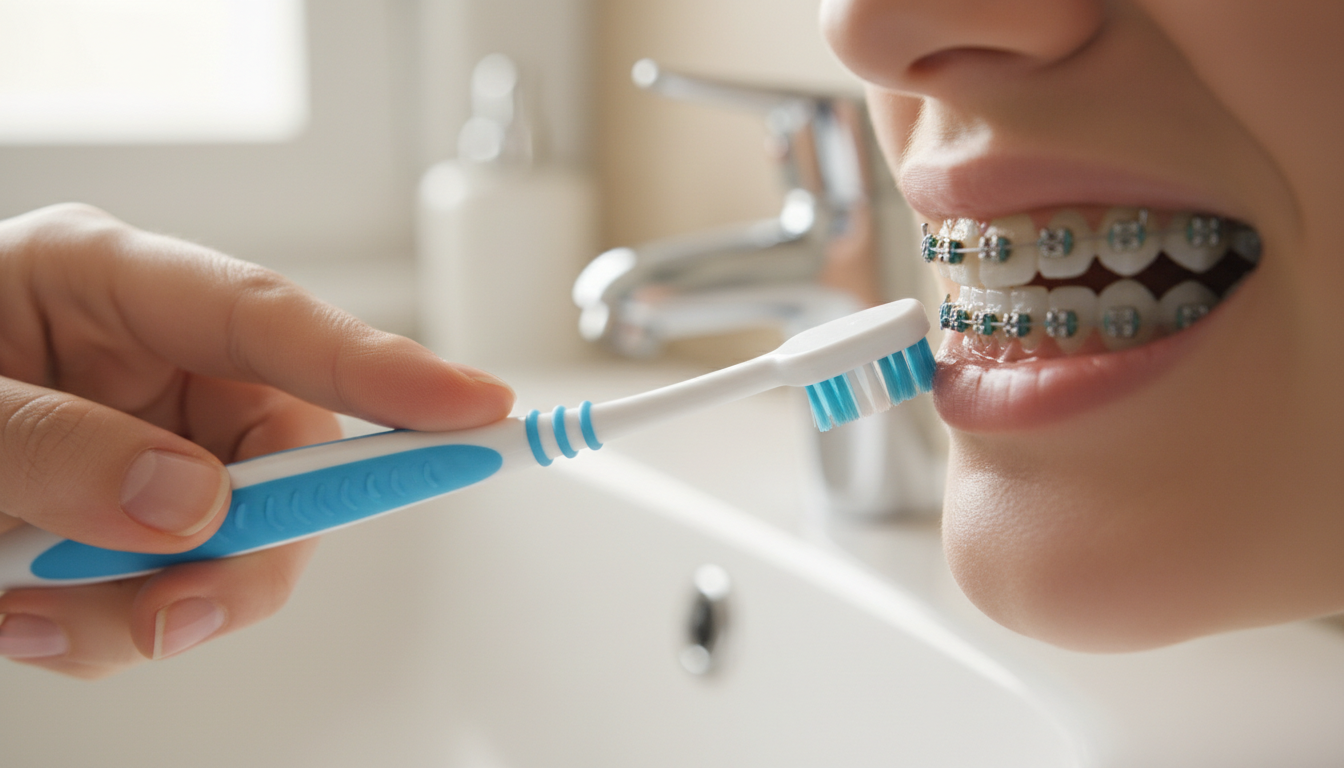
Brushing with braces takes a little more time, but it’s worth the effort.
Step-by-Step Brushing Tips
- Brush after every meal when possible
- Use a soft-bristled or orthodontic toothbrush
- Angle the brush above and below the brackets
- Brush gently around wires and brackets
- Brush for at least two minutes
An electric toothbrush can be especially helpful for patients with braces.
Choosing the Right Toothpaste
Fluoride toothpaste is essential during orthodontic treatment. It strengthens enamel and helps prevent cavities. Your orthodontist may also recommend a fluoride rinse for extra protection.
How to Floss With Braces
Flossing with braces may feel challenging at first, but it becomes easier with practice.
Flossing Tools That Help
- Floss threaders
- Orthodontic floss
- Water flossers
- Interdental brushes
Many patients find water flossers especially convenient for reaching around brackets and wires.
Daily Oral Care Routine With Braces
A simple daily routine keeps your smile healthy:
- Brush after meals and before bed
- Floss at least once daily
- Rinse with fluoride mouthwash
- Check for food around brackets
Consistency is key.
Common Mistakes to Avoid
- Skipping flossing
- Brushing too hard
- Using hard-bristled toothbrushes
- Ignoring swollen or bleeding gums
If you notice persistent gum irritation, contact your orthodontist.
FAQs About Brushing & Flossing With Braces
How often should I brush with braces?
Ideally after every meal, but at least twice a day.
Do I really need to floss every day?
Yes. Daily flossing prevents plaque buildup and gum issues.
Are water flossers effective with braces?
Yes. Water flossers are a great supplement to traditional flossing.
Can poor hygiene slow my treatment?
Yes. Oral health issues can delay orthodontic progress.
What if my gums bleed?
Mild bleeding is common at first, but persistent bleeding should be checked by your orthodontist.
Related Braces Care Resources
Need Help With Braces Care?
If you’re brushing with braces and have questions, our orthodontic team in Alexandria, Woodbridge, and Ashburn, VA is here to help.
Book your free orthodontic consultation and get expert support throughout your treatment.