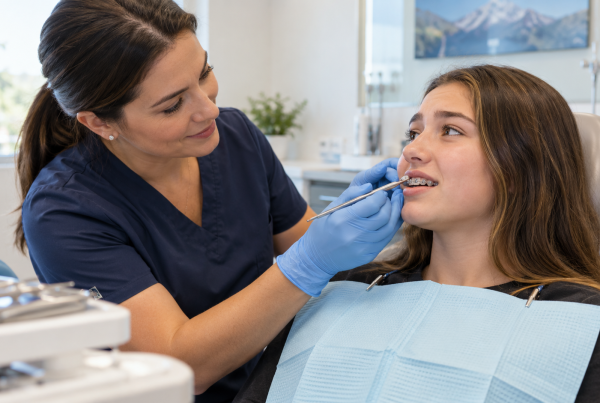
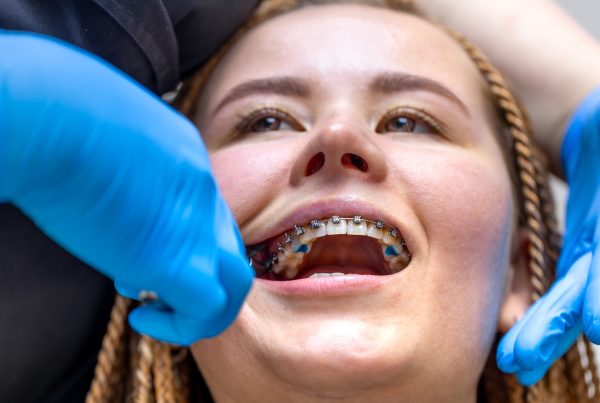
Orthodontics also has a surprisingly long history. From early attempts to move teeth with metal appliances to today’s braces, clear aligners, digital scans, and customized treatment plans, the specialty has changed dramatically.
Here are seven interesting facts that explain where orthodontics came from, how teeth actually move, and why professional treatment involves much more than choosing an appliance.
1. The Word “Orthodontics” Comes From Greek
The term orthodontics is derived from Greek words associated with “straight” or “correct” and “tooth.” In simple terms, orthodontics is concerned with correcting the position of teeth.
Modern orthodontics goes further than that definition, however. Treatment may also address the relationship between the upper and lower jaws, crowding, spacing, overbites, underbites, crossbites, open bites, and other problems involving how the teeth fit together.
This is why orthodontic treatment is not purely cosmetic. A straighter smile may be one result, but treatment planning also considers bite function, tooth position, jaw relationships, oral hygiene, and long-term stability.
2. People Have Been Trying to Straighten Teeth for Centuries
Misaligned and crowded teeth are certainly not a modern problem. Archaeological evidence shows that people in ancient civilizations experienced many of the same dental alignment problems seen today.
Early physicians and dentists also wrote about irregular tooth position and jaw relationships. By the 18th century, European dentists were developing mechanical devices intended to influence tooth position.
French dentist Pierre Fauchard, whose work helped shape modern dentistry, described an early device known as the bandeau. It was very different from today’s orthodontic appliances, but it reflected an important idea that remains central to orthodontics: carefully controlled force can influence tooth position over time.
Today’s treatment methods are far more sophisticated. Depending on the patient’s needs, an orthodontist may recommend different types of braces, clear aligners, retainers, expanders, or other orthodontic appliances.
3. Orthodontics Became Dentistry’s First Recognized Specialty
Orthodontics developed into a distinct dental specialty around the beginning of the 20th century. One of the most influential figures in that development was Dr. Edward H. Angle, whose work helped establish systematic methods for diagnosing and treating malocclusion, or improper bite relationships.
This specialization remains important today.
A dentist provides broad dental care, while an orthodontist receives additional specialized education focused on areas such as:
- tooth movement
- bite correction
- jaw growth and development
- orthodontic appliances
- treatment planning
- retention after active treatment
At American Braces & Smile Center, Dr. Ron Hessamfar provides specialized orthodontic care for children, teenagers, and adults across Northern Virginia.

4. Early Braces Often Used Precious Metals Such as Gold
Before stainless steel became widely used in orthodontics, early orthodontic appliances were made from several different materials, including precious metals such as gold.
Gold was useful because it was relatively easy to shape. That flexibility also had disadvantages: the material could deform, which meant appliances often required frequent adjustment.
Modern orthodontic materials are much more predictable. Today’s braces use carefully engineered brackets and archwires designed to deliver controlled forces to the teeth.
Patients also have more choices than ever before. Depending on the case, treatment may include metal braces, ceramic braces, lingual braces, clear aligners, or removable orthodontic appliances.
5. Teeth Move Because Orthodontists Apply Controlled Force
Teeth may feel firmly fixed in place, but they are capable of moving through the jawbone when the correct amount of force is applied over time.
Orthodontic appliances create controlled pressure that encourages a tooth to gradually change position. This movement must be carefully planned because the goal is not simply to push teeth until they look straight.
An orthodontist considers factors such as:
- the direction each tooth needs to move
- the amount of space available
- the patient’s bite
- root position
- jaw growth and development
- the health of the teeth and supporting tissues
This also explains why uncontrolled forces can affect tooth position. Long-term habits such as persistent thumb sucking or certain abnormal oral habits may contribute to changes in the position of teeth or the bite, particularly while a child’s jaws are still developing.
6. Orthodontic Tooth Movement Depends on Bone Remodeling
One of the most interesting facts about orthodontics is that treatment depends on the body’s natural ability to remodel bone.
When gentle orthodontic force is applied to a tooth, the tissues and bone surrounding that tooth respond. Specialized cells participate in removing bone in one area while new bone develops in another. This biological process is known as bone remodeling.
In simplified terms:
- Osteoclasts help resorb, or break down, bone where space is needed for movement.
- Osteoblasts help form new bone as the tooth moves into its new position.
This process occurs gradually, which is one reason orthodontic treatment takes time. Trying to move teeth too aggressively is not the goal. Orthodontists aim to use controlled forces that allow the supporting tissues to adapt as treatment progresses.
After active treatment is complete, retainers are usually needed because the tissues and bone surrounding the teeth also need time to adapt to their new positions. You can read more about removable retainers after orthodontic treatment.
7. Orthodontic Treatment Is More Than Choosing Braces or Aligners
Patients sometimes begin their research by asking which appliance is best: metal braces, clear braces, or aligners.
But the appliance is only one part of orthodontic treatment.
The more important questions are:
- What is causing the alignment or bite problem?
- Which teeth need to move?
- Does the jaw relationship also need to be addressed?
- How much space is available?
- What treatment mechanics are appropriate for this patient?
- How will the result be maintained after treatment?
Two patients who appear to have similar crooked teeth may need very different treatment plans. One patient may respond well to clear aligners, while another may benefit from fixed braces or an additional orthodontic appliance.
That is why orthodontic care should begin with a professional evaluation rather than selecting a treatment product first.
Why These Orthodontic Facts Matter
Understanding how orthodontics works can make treatment easier to understand. Braces and aligners do not simply “pull teeth straight.” Orthodontic treatment uses biology, biomechanics, careful diagnosis, and controlled forces to gradually change tooth position and improve the relationship between the teeth and jaws.
At American Braces & Smile Center Orthodontics, we provide orthodontic care for children, teens, and adults in Ashburn, Woodbridge, Alexandria, and surrounding Northern Virginia communities. Treatment recommendations are based on the patient’s individual teeth, bite, jaw relationships, age, and treatment goals.
Frequently Asked Questions About Orthodontics
What exactly does an orthodontist do?
An orthodontist diagnoses and treats problems involving tooth alignment, bite relationships, and jaw development. Treatment may involve braces, clear aligners, retainers, expanders, or other orthodontic appliances.
Is orthodontic treatment only about straightening teeth?
No. Straightening teeth is one part of orthodontics, but treatment may also improve the way the upper and lower teeth fit together. Orthodontists evaluate both tooth position and bite relationships when developing a treatment plan.
How do braces actually move teeth?
Braces apply gentle, controlled forces to the teeth. The tissues and bone surrounding each tooth respond through a natural process called bone remodeling, allowing the tooth to gradually move into a planned position.
Are braces or clear aligners better?
Neither option is automatically better for every patient. The most appropriate treatment depends on the type and complexity of the tooth movement required, the patient’s bite, age, lifestyle, and ability to follow treatment instructions.
How do I know which orthodontic treatment I need?
The best starting point is an orthodontic examination. Your orthodontist can evaluate your teeth and bite, review any necessary digital scans or imaging, and explain which treatment options are appropriate for your specific needs.
Considering Orthodontic Treatment in Northern Virginia?
If you are thinking about braces, clear aligners, or another orthodontic treatment, the first step is understanding what is happening with your teeth and bite.
American Braces & Smile Center has more than 20 years of orthodontic experience and serves children, teenagers, and adults from our offices in Ashburn, Woodbridge, and Alexandria, Virginia.
Schedule a free, no-obligation orthodontic consultation to discuss your smile, bite, and treatment options with our orthodontic team.