orthodontist Leesburg VA

What Is It Like to Have Braces Day to Day?

For most patients, day-to-day life with braces is straightforward once you adjust to the first week or two. The key habits that make the biggest difference are avoiding foods that can damage brackets and wires, maintaining excellent oral hygiene, wearing any prescribed appliances consistently, and contacting ABSC promptly if anything breaks or feels uncomfortable. Patients who follow these guidelines consistently experience shorter treatment times, fewer emergency appointments, and better final results. Dr. Hessamfar and the ABSC team are here to support you at every step — do not hesitate to reach out between appointments if you have questions or concerns.

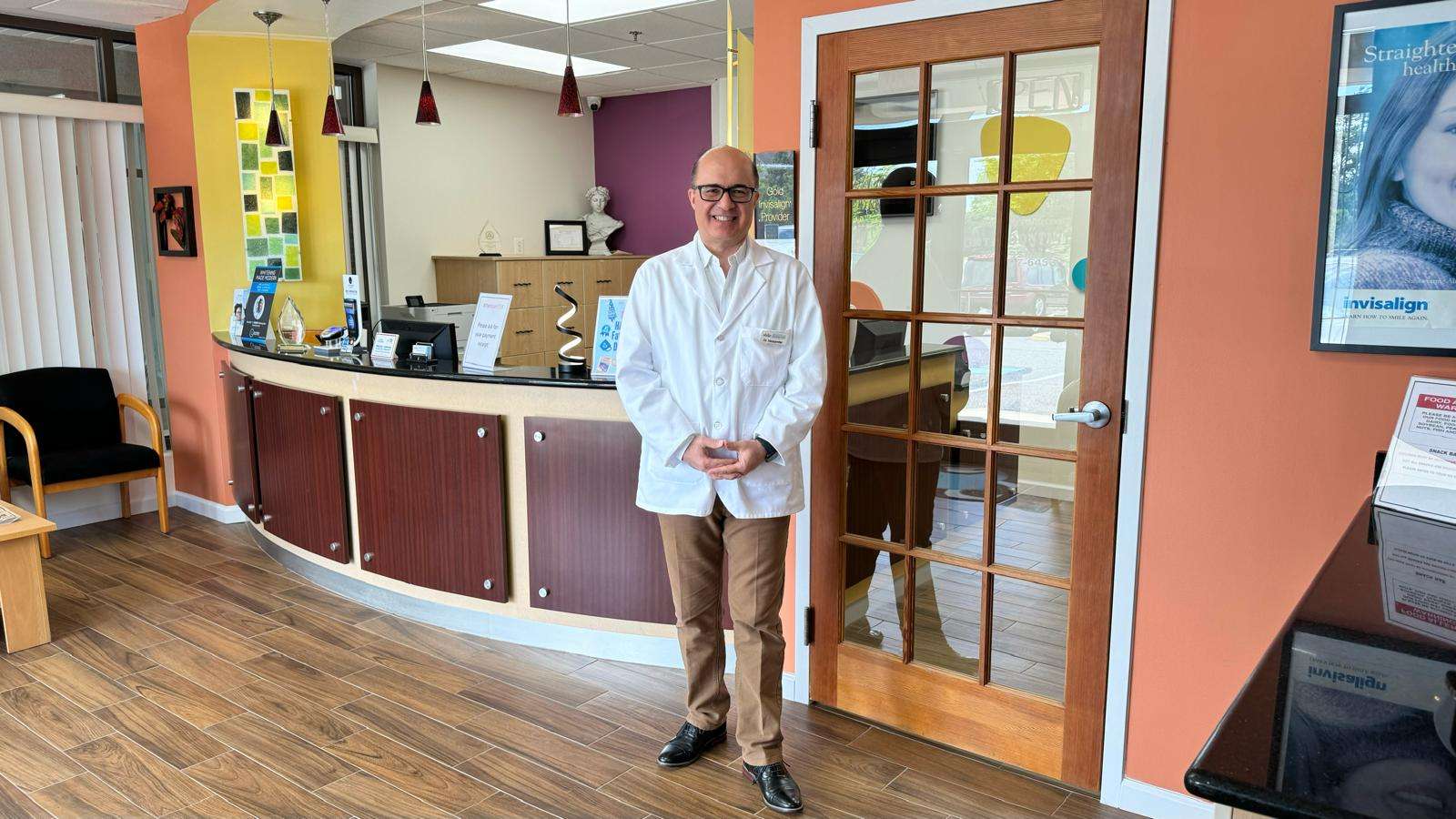
Dr. Ron Hessamfar DMD MS orthodontist at American Braces and Smile Center Northern Virginia

Certain foods can bend wires, break brackets, and loosen bands — which means more repair appointments and a longer treatment time. Protecting your braces by making smart food choices is one of the most effective things you can do to keep your treatment on track. All restricted foods can be reintroduced once your braces are removed.

Foods to Avoid With Braces

  • Chewy foods — bagels, licorice, chewy bread rolls
  • Crunchy foods — popcorn, chips, hard pretzels, crackers
  • Sticky foods — caramel candy, toffee, chewing gum, gummy bears
  • Hard foods — nuts, hard candy, ice, hard chocolate
  • Foods requiring hard biting — corn on the cob, whole apples, raw carrots, hard rolls (cut or cook these instead)

Foods You Can Eat With Braces

  • Dairy — soft cheese, pudding, yogurt, milk
  • Breads & grains — soft tortillas, pancakes, muffins, pasta, soft rice
  • Meat & poultry — soft cooked chicken, meatballs, lunch meats, ground meat
  • Seafood — tuna, salmon, soft fish, crab
  • Vegetables — mashed potatoes, steamed spinach, cooked beans, soft cooked vegetables
  • Fruits — applesauce, bananas, soft berries, melon, fruit juice
  • Treats — ice cream, milkshakes, Jell-O, soft cake, soft cookies

Tip: Hard fruits and vegetables like apples and carrots are fine to eat — just cut them into small, bite-sized pieces rather than biting into them directly.

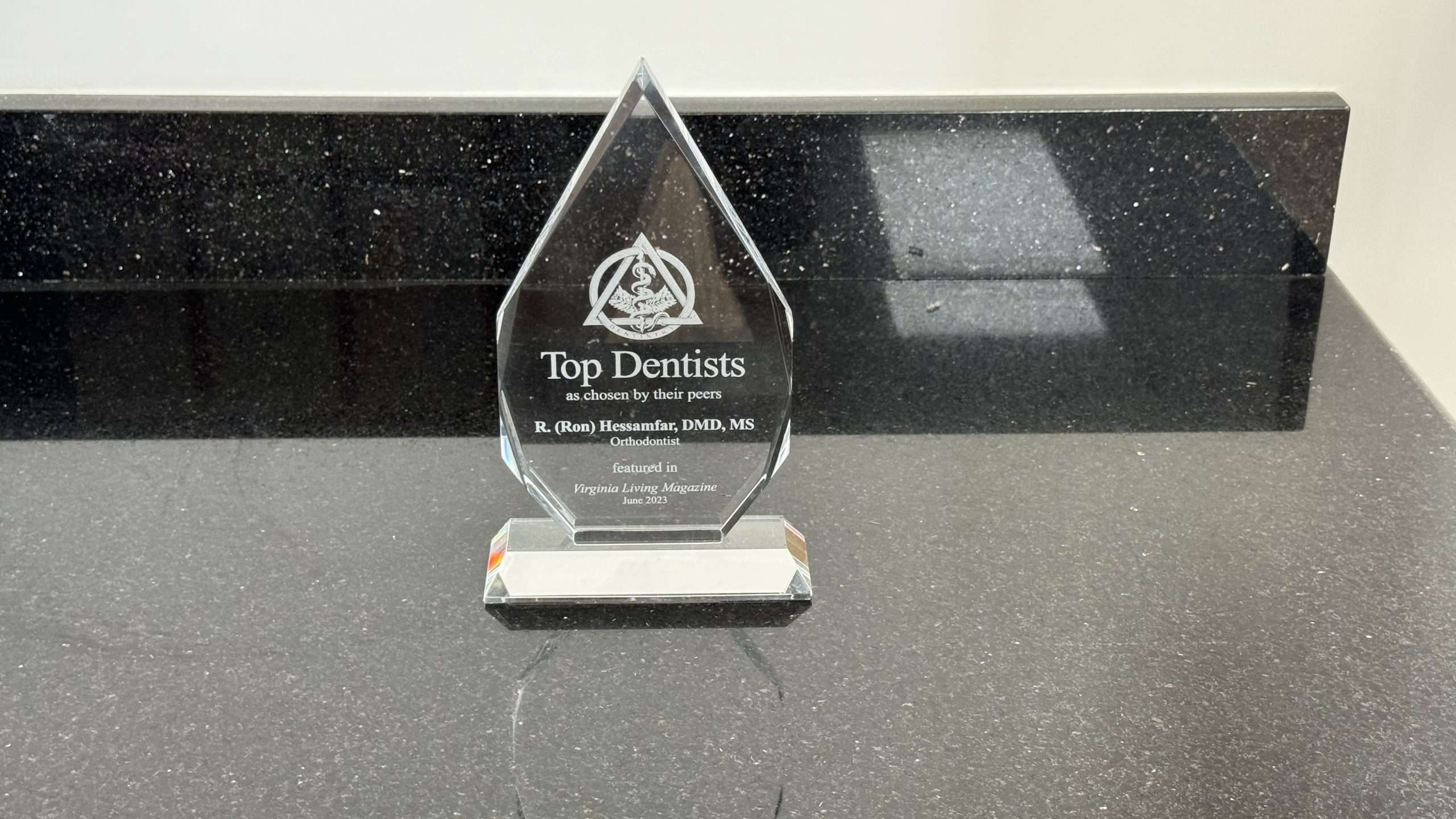
Dr. Hessamfar AAO American Association of Orthodontists member Northern Virginia

Yes — and it is actually a sign that your treatment is working. In order for teeth to move into their new positions, the bone surrounding the tooth root must temporarily loosen to allow movement. This means your teeth may feel slightly loose during active treatment, which can be surprising but is completely normal and expected. Once your teeth reach their target positions, the surrounding bone firms back up and the looseness resolves. If you are concerned about the degree of looseness you are experiencing, do not hesitate to call ABSC.

Metal braces clear braces and Invisalign options at ABSC Orthodontics Ashburn VA

Maintaining excellent oral hygiene with braces is more important — and more challenging — than without them. Food and plaque can easily become trapped around brackets and wires, increasing the risk of cavities, white spot lesions, and gum disease. Brush after every meal and floss at least once a day throughout your entire treatment. For full step-by-step instructions, visit our dedicated brushing and flossing with braces guide.

Wearing Your Elastics Consistently

If Dr. Hessamfar has prescribed elastics (rubber bands) as part of your treatment, wearing them exactly as instructed is critical. Elastics apply the directional force needed to correct your bite — without them, that part of your treatment simply does not progress. Most patients need to wear their elastics 22 hours a day, replacing them daily. For full instructions on how to attach and care for your elastics, visit our elastics wearing guide.

Most patients experience tenderness when chewing for 2 to 5 days after getting braces and after each adjustment appointment. Sticking to soft foods during this period and taking acetaminophen as needed will manage discomfort effectively.

Yes. Patients with braces can participate fully in all sports. We strongly recommend wearing an orthodontic mouthguard for any contact sport to protect both the braces and the teeth from impact. Ask ABSC for a mouthguard recommendation at your next appointment.

Yes. Most patients adapt within 1 to 2 weeks. Wind and brass instrument players may notice a brief adjustment period immediately after getting braces or after major wire changes, but most return to normal playing quickly with practice.

Apply orthodontic wax over the end of the wire to create a smooth barrier and prevent irritation. Contact ABSC to schedule an appointment to have the wire trimmed or adjusted. If the wire is causing significant pain and cannot be covered with wax, it may be carefully trimmed with clean nail clippers as a temporary measure only.

No. Chewing gum — including sugar-free gum — is one of the foods to avoid during treatment. Gum sticks to brackets and wires and can pull components loose, potentially extending your treatment time.

Adjustment appointments at ABSC are typically scheduled every 4 to 8 weeks. These brief visits allow Dr. Hessamfar to check your progress, change or tighten wires, and replace elastic bands. Keeping all scheduled appointments is essential for staying on track.

Contact ABSC as soon as possible to schedule a repair appointment. If the bracket is still attached to the wire but loose, leave it in place and apply wax if it is causing irritation. Do not attempt to reattach it yourself.

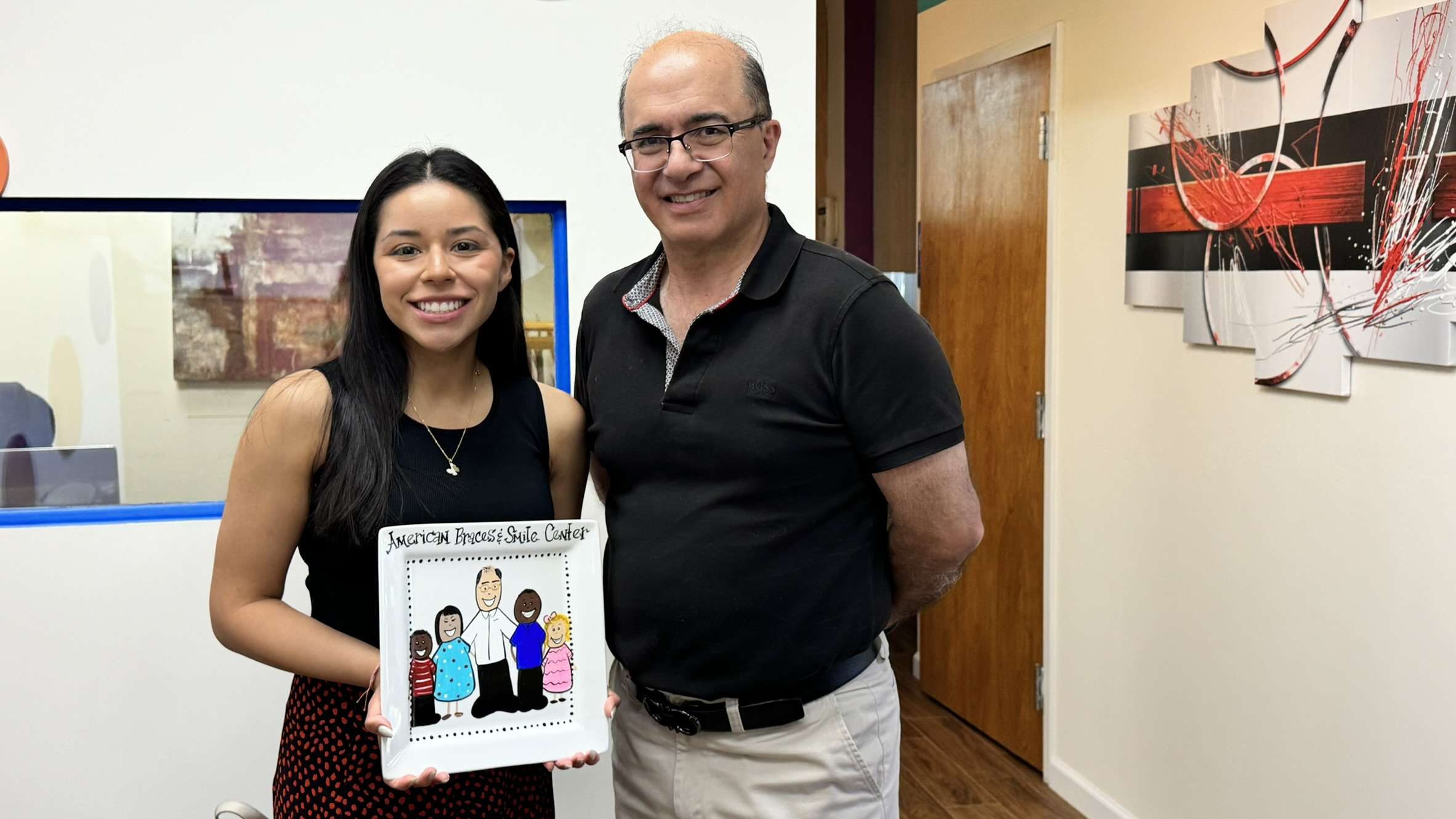
Dr. Ron Hessamfar orthodontist Northern Virginia personal photo family
Happy patient with straight teeth after braces treatment at ABSC Orthodontics in Ashburn Virginia